Tuesday, December 17, 2019

Pan fried pumpkin blossoms and bottle gourd skin fritters

Pumpkin blossoms

Most people love pumpkins whether green or orange. However, have you ever tried eating pumpkin blossoms, Nepali-style? It’s a delicacy in the southern plains of Nepal and they taste finger-licking good! Called kadima ke phula ke tikiya in eastern Nepal, it’s also a famous dish in the eastern Indian state Odisha, where they call it kakharu fula bhaja.

Here’s how you can prepare pan-fried pumpkin blossoms at home:

Pumpkin flowers after removing the pistils

Collect pumpkin flowers and remove the pistils. Make sure the petals are intact and dust any ants, aphids and beetles from them. Wash the petals with cold water and let them drain.

Rice flour batter ingredients

Prepare a batter of rice flour, turmeric powder, chilli powder and add other spices and salt to taste. If you want the fritters to be crispy, use coarse rice flour.

Covering the flowers with rice flour batter

Dip the petals in the batter while you heat mustard oil in a pan.

Frying the flowers in mustard oil

Fry the blossoms and turn over as the they turn yellowish brown. Make sure the flower inside the batter gets cooked well. Once you drain the oil from the fritter, it’s ready to eat. It tastes best when served with puffed rice.

A good thing about rural lifestyles is that they try to minimise wastage and practise sustainability. Called lauka ke chhala ke tikiya, fritters made from bottle gourd skin are another delicacy that is rarely found in other areas.

Here’s how to make these tasty fritters for yourself:

Bottle gourd

Wash the bottle gourd. Cut it into two halves. Rest the flat part on a plate and with the help of a knife, peeler or grater scrape the skin off the bottle gourd. Make sure you only remove the green skin and that it is shredded into fine pieces.

Scraping the skin of bottle gourd

Make a batter of rice flour, turmeric powder, chilli powder, spices and salt and as with the pan-fried pumpkin blossoms, if you want to make the fritters crispy, use coarse rice flour.

Finely grated bottle gourd skin

Put the bottle gourd skin into the batter and shape into flat round fritters.

Ready-to-eat bottle gourd skin fritters

Heat mustard oil in a pan and fry the fritters on both sides. Again, drain to remove excess oil and they’re ready to eat. Like the pan fried pumpkin blossoms, these fritters taste best with either puffed or beaten rice.

Republished from ECS.

Tuesday, November 12, 2019

Nepalis as profiled by the book ‘The People of India’

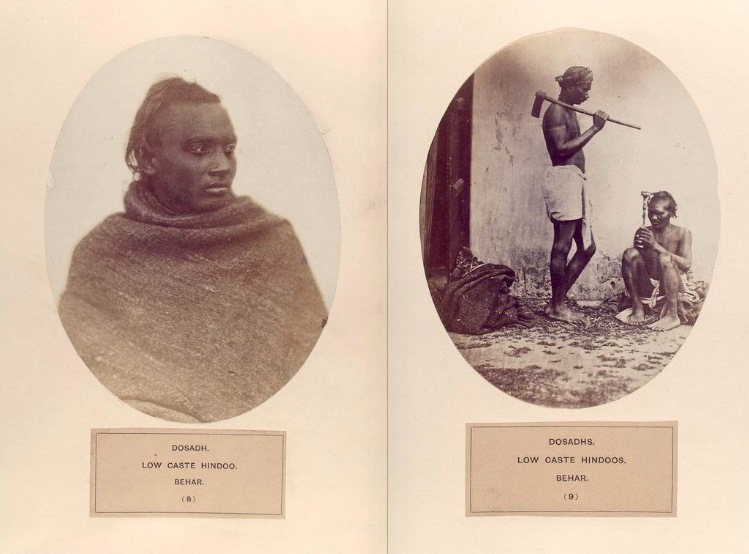
The New York Public Library Digital Collections has released The People of India in the public domain. You can now view, download and use the images from the rare book.

Cover of the book 'People of India'. Image from the New York Public Library Digital Collections

Edited by J. Forbes Watson and John William Kaye, the book comprises three volumes and has a collection of photographic illustrations with descriptive letterpress. Published in the year 1868 by the India Museum, the book gives you a rare view of the races and tribes of that time.

Profiled in page 117 of the third volume of the book, here’s an image of a Tharu couple from Shahjahanpur, now in Uttar Pradesh of India. The writer duo describe the couple as ‘Tharoos. (Low Caste Hindoos: Probably Aboriginal.) Shahjehanpore.’

Image from the New York Public Library Digital Collections

Further, you can see images of people from Nepal (written ‘Nipal’) and the neighbouring Indian states.

Image from the New York Public Library Digital Collections

Image from the New York Public Library Digital Collections

Image from the New York Public Library Digital Collections

Image from the New York Public Library Digital Collections

Image from the New York Public Library Digital Collections

Image from the New York Public Library Digital Collections

Image from the New York Public Library Digital Collections

Image from the New York Public Library Digital Collections

Image from the New York Public Library Digital Collections

Image from the New York Public Library Digital Collections

Image from the New York Public Library Digital Collections

Image from the New York Public Library Digital Collections

Image from the New York Public Library Digital Collections

Image from the New York Public Library Digital Collections

Image from the New York Public Library Digital Collections

Image from the New York Public Library Digital Collections

Note: All the above images have been arranged in alphabetical order.

Thursday, September 12, 2019

Different shapes, one taste -- dhikri, bagiya and bhakka


Bagiya is famous, especially in southern plains of Eastern Nepal.

Among several finger-licking dishes made from rice flour, dhikri, bagiya, and bhakka are popular, especially in the southern plains of Nepal. While dhikri, tubular and cylindrical in shape, is popular among the Tharus in Western Nepal, bagiya, which is flat, is a favorite among people living in Eastern Nepal. Bhakka, the round version, is especially popular among the Rajbanshis and others in Eastern Nepal.

While dhikri and bhakka are made by just shaping the rice dough and steaming it, bagiya is generally stuffed with lentils or mashed potatoes. Dhikri is prepared principally during the Magh or Maghe Sankrati festival while bagiya is prepared especially during the Deepawali festival.

Dhikri is popular among Tharus of Western Nepal.

Let’s see how bagiya is made:

The rice is soaked in water and ground in a dhiki, the traditional rice milling machine. These days rice mills have replaced the dhikis. However, flour ground in a dhiki tastes much better than that ground in a rice mill.

The flour is then sifted and fried. Warm water is mixed with it and it is kneaded enough to make the dough tender. Steamed lentils or mashed potatoes, spices, ginger and salt are added to the dough and it is shaped by hand into a round, and flattened with the palms at the middle while both ends are left protruding. Then they are steamed over a clay pot of boiling water.

The steamed bagiya is served with chutney or vegetable curry. In Eastern Nepal, the Tharus and others celebrate the Govardhan Pooja (the day following Laxmi Pooja) by worshipping their agriculture tools and cattle, and eating bagiya. Every household makes sure to prepare bagiya from the rice flour of newly harvested rice on that day.

Bhakka, originating from Eastern Nepal, is now becoming popular in main cities.

As these dishes are made by steaming rice flour dough, all of them are not only delicious but also healthy. However, these tasty dishes are still struggling to find a place in eateries, although a few outlets have started selling bhakka, dhikri and bagiya in cities including Kathmandu, we are happy to say!

Republished from ECS.

Wednesday, August 14, 2019

These phrases and idioms show the relationship between Tharus and their cattle

Monochrome bull in alley photo by Adam Sherez ( mr_sherez) on Unsplash

No doubt, Tharus have been tilling the earth for centuries. And their partners have been none other than the oxen. While the oxen have been treated as mere animals and have been the origin of the metaphor ‘goru’ in Nepali for morons, the Tharus have had deep respect for these animals. Have a look at few phrases and idioms in Tharu language that further establishes this fact. These idioms also showcase the Tharu way of life.

Bahaut maugi me marad upas, bahut marad me barad upas

This idiom means ‘too many cooks spoil the broth’. It says: “If you have too many women [in the house], a man has to remain hungry; if you have too many men [in the house], an ox has to remain hungry.” Although sexist, the idiom shows how the household chores including cooking was assigned to women while other outdoor activities were taken care of by men including feeding and grazing the cattle.

Mangni barad ke dant dekhe gelai kahi

I haven’t come across an English idiom equivalent to this one. This idiom means you need to have money with you if you’re willing to buy something. It says: “Why to undertake seeing the teeth of an ox, if you don’t have money [in your pockets]?” Buying and selling oxen was common between farmers and traders, and while buying oxen it was mandatory to have a look at the pair of teeth the animals had. So as to ascertain the age of the oxen!

Har ne barad dhodhai marad

This idiom is about people who brag a lot. It says: “[Some people] brag a lot though they don’t even have a plough and oxen.” Have you ever heard the Chinese proverb “Great boast, small roast”? This exactly matches in meaning with the Tharu idiom.

Jau dekhi barad maina, ta ladi yahai par se dyadi baina

This idiom means leap at the opportunity (to do something). It says: “If you see a suitable ox (for ploughing or pulling a cart), give the advance from the river bank [where you’re standing].” It shows the urgency and says “don’t even think of crossing the river to get to the seller or the ox, just hand over the advance to seal the deal.”

Sunday, July 14, 2019

The three tasty nuggets from the southern plains of Nepal

Republished from ECS.

As the saying goes ‘make hay while the sun shines', local communities in Nepal have the habit of saving food items for the rainy season when vegetables are scarce. They have been making gundruk, sinki, and pickles along with drying vegetables to save for rainy days since time immemorial. Among those several food items, namely adauri, chiknauri and fulauri are three nuggets that you must taste while travelling to the southern plains of Nepal.

Adauri

Adauri are made from black gram, which is soaked in water overnight and then dehusked the following day. This dehusked black gram is then left to dry in the sun for two to three days and then milled into flour. The flour is mixed with water to form a gooey dough and shaped into small nuggets, which are spread either on a mat or a nanglo (a flat, round bamboo tray) and left to dry in the sun for a day or two. A thin layer of mustard oil is used to coat the surface before spreading out the adauri so that they don’t stick to the mat or nanglo. Once dry they are stored in an airtight dry container. They tastes superb and are full of protein. However, it's tricky to cook. You need to fry it before adding spices, water and salt to taste. And if you fry it more than needed, it further stiffens and you won't be able to chew it. But if you fry it less than required, it smells like raw black gram flour. However, if fried to a reddish brown colour and then cooked as any other curry, it softens and tastes great. That's why, especially in the southern plains, a newly married bride is asked to cook adauri when she arrives at the groom's house, to check her culinary skills!

Adauri is also cooked together with other vegetables and when it’s combined with potatoes, bottle gourd or brinjal (eggplant) it tastes much better. Although adauri is made mainly from black gram flour, it is occasionally also made from other lentils like green gram. The green gram adauri and brinjal make a great combination.


Chiknauri

Another nugget, in fact, is a super nugget since it is made from flaxseed which we all know is a super food. Called chiknauri (beware, it's a vulgar word in Nepali) in the southern plains of Nepal, flaxseeds are bound together with a black gram paste and salt is added to taste. The nuggets, again like adauri, are spread out on a mat or nanglo with a thin layer of mustard oil and left to dry in the sun. Once dry, they can be stored in an air-tight container and fried up whenever you want to eat them. They’re crispy and tasty.

Fulauri

Fulauri or rice flour cracker, is our final southern food and it’s pretty simple to make. Rice flour is boiled together with water till it becomes sticky and gooey. Then salt is added to taste, together with a bit of carom seeds and edible colour before the batter is allowed to cool. Then small nuggets are made from the mixture and left to dry in the sun. These can also be fried and are then ready to eat as snacks.

Monday, April 8, 2019

Special food combinations from the Terai that sound absurd but taste amazing

Republished from ECS.

Identifying ideal food combinations is not only a culinary art but also a tedious process. If you get the combination right, the food not only tastes amazing but also has several health benefits. However, if the combination goes haywire, it might lead even to food poisoning. But we are lucky to inherit so many different food traditions handed down to us by our elders. Let’s have a look at some unique food combinations from the southern plains of Nepal.

Khesari saag.
Grass peas and brinjal (Khesari – bhanta)
Grass peas (Lathyrus sativus), grown as a forage in Europe, is considered a poor man’s pigeon pea (rahar ko dal) in the Terai. Although there’s a common belief that its prolonged use can cause paralysis, people love the grass peas and brinjal (eggplant or aubergine) curry in the southern plains.

Here’s how you cook it: Cut khesari leaves into fine pieces and chop the brinjal into fine cubes. Get your spices ready to start with. Then heat few spoonful of mustard oil, fry finely with chopped garlic, onion, ginger and chilly pieces. As the onion turns brown, add the brinjal pieces and fry them for a while. Then slowly add the grass peas and cook for a while. As you cook the curry, add the spices (turmeric, chilly, coriander and cumin powder) and water and cook on low heat. You can eat the curry with boiled rice but it tastes better when eaten with puffed rice.

Bottle gourd and mustard greens (Gonja)
Have you ever tried cooking bottle gourd and mustard greens together? The mixed curry of bottle gourd and mustard greens, called gonja in Eastern Nepal, is a local delicacy during the onset of the winter season.

Here’s how you cook it: Scrape the bottle gourd and cut it into small pieces. Also cut small pieces of mustard leaves. Just like other curries, start with frying onion, chillies, ginger and garlic pieces. You can also fry fenugreek and cumin seeds for a unique taste. Once the onion gets brown, add the bottle gourd pieces and fry till they pieces become a bit translucent. Then add the mustard greens. Fry them both and cook on low heat. Finally add a bit of water and add a pinch of rice flour, if available. Let it cook for a while—it'll be ready in few minutes. Serve it with either rice or puffed rice. They also cook bottle gourd and sinki (fermented and dried greens) together. It’s also called gonja but is a bit sour in taste.

Drumsticks and flaxseed.
Drumstick and flaxseed (moonga – aalash)
Drumstick, flaxseed and bay leaf make a yummy curry. Just roast the seeds and grind them into powder form. While cooking the drumsticks start by frying the bay leaves, dried red chillies and nicely sliced onions in mustard oil. As the onion slices turn brown add the drumstick pieces and slices of potatoes to taste and cook on low heat. Add cumin, coriander, turmeric powder, ginger garlic paste and salt to taste and add warm water. Finally, add the flaxseed powder for thick gravy and your dish is ready!

Jhilli
Jhilli – dahi curry
Jhilli, made of chickpea flour, looks like a jalebi but is salty in taste. Fried in mustard oil or vanaspati ghee, they are one of the most sought after snacks in haats, the weekly markets of the southern plains. And if you cook it in a thick gravy of chopped onion, spices and dahi (curd), it makes a fabulous curry.

Elephant foot yam and mango ginger (Oal- amadi)
We talked about elephant foot yam aka oal curry in our September 2018 issue. When mixed with mango ginger aka amadi, the oal tastes much better. The amadi looks like ginger but tastes like raw mango and it makes a unique combination with oal. You’ll just need to grind elephant foot yam and mango ginger, together with chilly and spices. Then dry the mixture in the sun first before packing it in a bottle with mustard oil and salt to taste. It's finger licking good!

Fresh bamboo shoots and flaxseed (Tama – aalash)
The fresh bamboo shoots are a bit bitter when cooked without treating with baking soda. But when boiled with baking soda, the bitterness goes away. And once garnished with flaxseed powder, the slurpy bamboo shoot curry tastes amazing! It's a peculiar dish cooked in the southern plains of Nepal and since the flaxseed has been deemed a superfood, the curry, if introduced to a wider audience, is set to be a hit among foodies.

Koiralo leaves and flaxseed
The Bauhinia variegata L. flowers are delicious to eat as a pickle or chutney. Called koiralo in Nepali and koilar in the local language of the southern plains of Nepal, its tender leaves are eaten as a popular vegetable. And if garnished with flaxseed powder just like the fresh bamboo shoots, it tastes superb!

The food of southern Nepal is diverse and delicious – give one of the above recipes a try, or ask for these dishes at local eateries the next time you visit the plains.

Tuesday, February 19, 2019

Looks like ginger, tastes like mango

Republished from ECS.

Amadi looks like ginger but tastes like raw mango.

If you go to the southern plains of eastern Nepal and ask for local snacks at roadside eateries, you’ll most probably be served a savory mixture of beaten and puffed rice, chickpea curry, fritters, fried chili, and a special chutney made from amadi.

Amadi looks like ginger or turmeric, but tastes like a raw mango. In eastern Nepal, a mango is called aam, and ginger is called aadi, so these two words might have been combined to derive the word ‘amadi’. In the hilly region, it is called aaphaledo, while in western Nepal, it is called aaphardi, or aamhardi—a combination of aap, or aam, for mango, and hardi for turmeric. Its English name is mango ginger or white turmeric.

Amadi chutney, tangy but delicious, is also a must-have item at community feasts in the eastern   Terai. Made by grinding amadi and chili together and adding mustard oil and salt to taste, the chutney not only adds that extra special flavor, but also helps digestion.

Grown sparsely in the Terai and mid-hills, this root is also used as a medicine. It’s been used in Ayurveda and Greek medicine as a cure for all types of itching and skin diseases and as an appetizer. Recently, researchers in Germany have discovered that it is a good medicine for obesity. Tharus in eastern Nepal believe that it even cures paralysis, and is an antidote for the effects of heat wave.

While different types of pickles can be made from amadi, the oal (elephant foot yam) and amadi pickle stands out among all. For that, you’ll need to gather mango ginger, elephant foot yam, tamarind, green chilies, and other spices. Clean and cut the mango ginger and elephant foot yam into small slices and let them dry for a day. Then, crush them into fine pieces together with tamarind, chilies, and ginger. Add turmeric powder, other spices, and salt to taste, and mix them well. Leave the mixture to dry in the sun again for a day or two and then pack it into a bottle and add mustard oil to it. The pickle can be eaten from the first day itself, but it tastes much better if consumed a few days after it’s made.