Friday, July 26, 2013

Three mouth-watering Tharu dishes

Kakhod ke chutney (crab chutney)
Crabs can be found crawling in paddy fields during the June-September period. They are also found in ponds, rivers and canals. While the crab is filled with protein, you will need to take care while eating it. Firstly, look whether the crab is from a clean water source or not. And if you want to catch the crab on your own, make sure that you grab the pincers first. Otherwise, the crab can bite you and you might end up hurting your fingers and hand.

(c) Vivek Chaudhary

Secondly, clean the crab and nail it so that it doesn't bite. For that break one if its limbs and use it as a nail to lock the pincer. Once you put it like a peg, the crab won't be able to move its pincer. Do the same with the second pincer. Now, the crab is at your mercy. Open its abdomen and look for any parasites. If you find any, then remove them and clean it. It's better to rip off the abdomen.

Thirdly, break all the limbs. If you want to munch the legs, keep it aside and wash them properly. Then break the pincers and wash them properly. Now you can remove the locking pegs. The pincers are juicy and tasty, so put it aside to roast them separately.

Thirdly, prepare a fire to roast the crab. If possible fetch goitha (dung cake). A crab gets roasted uniformly on a burning goitha. If it is not available, go for coals or logs. Put the crab and pincers in the embers. In case of burning goitha, put the crab and pincers on it and cover them with another piece of goitha.       

Keep on checking so that they don't get burnt. After few minutes of roasting, take them out from the fire and wash off the burnt parts and charcoals. Remove the crust off the crab and set aside the roasted flesh. Add minced onions, chillies, turmeric powder, salt to taste and mustard oil, and mix well.

Now your dish is ready to be eaten with puffed rice, beaten rice or chapatis. The Tharus call it kankhod ke chutney and make sure they have it during the paddy season. You can munch the roasted pincer without further processing. It's juicy and delicious.

Chita roti (Tharu pancake)
Pancakes are a common dish among communities throughout Nepal. However, the Tharus have their own unique pancakes – they call it chita roti.

To prepare it you will need wheat flour, mustard oil and salt or sugar to your taste. The preparing process is very simple. Mix water to the flour and make a watery mixture. According to your taste, add either salt or sugar to the mixture. If you are adding salt, then make sure to add a pinch of turmeric powder to it.

Now spread mustard oil on a frying pan. You can also use a cauldron. Once the oil is hot, pour the mixture on the pan slowly and make the shape of a roti. With the help of spatula, spread the flour mixture.

After few minutes, turn over the roti and let the other side also cook well. Now you can serve the roti with chutney or curry. It's not mandatory to use mustard oil. You can try using clarified butter as well.

Airkanchan (Taro leaf cakes)
Taro is generally considered a second grade vegetable. However, if you cook it well and your cookery is innovative, you can prepare a mouth-watering dish out of it. The Tharus in the eastern Nepal love eating taro leaves (kachu) and they have their own method of cooking it. They call it airkanchan. If you haven't eaten it, try next time you are in the Terai or cook it in your own kitchen following the below steps.

Pick broad taro leaves and wash them. Put it on sun for half an hour, so that the leaves become softer. Prepare a paste of rice flour adding turmeric powder and salt to taste. Spread the leaves on the back of a Nanglo (sifter) or any other flat surface. Now apply a thin layer of the turmeric powder and rice flour paste to it. Put another layer of taro leaves and again apply the paste. Spread another layer of leaves on it and apply the paste. You can go for two or three layers.

Now fold the spread of leaves into a tubular shape. While folding, apply the paste to keep the leaves intact, so that you get the desired shape. Now cut it into pieces – you will get round shaped leaf cakes.
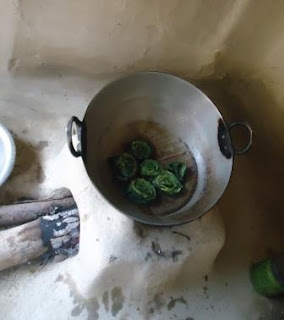
Spread mustard oil or clarified butter on a cauldron and fry the leaf cakes, turning over and frying both sides. Once your leaf cakes are fried, prepare a mixture of curd and water. Fry the sliced onions, chillies and spices along with turmeric powder in mustard oil and pour the curd-water mixture. Cook it for a while and once it starts boiling, add the fried leaf cakes. Leave the cakes to be cooked well, but make sure that the leaves don't peel off. Now your dish is ready and you can serve it with rice and other curries. 

Sunday, July 21, 2013

गुमनाम शहिद गुम्रा थारु: (आज ५४ औ गुम्रा स्मृति दिवस )

Republished from Facebook page of Tharu Community with Mr Dilli Malla's permission.

Written by Dilli Malla (dillimalla@gmail.com) 2010.
(c) Facebook/Tharu Community and Dilli Malla


‘यस्तै-यस्तै बेला थियो’- उनले एकपटक पश्चिम आकाशतिर हेरे । सूर्य बिस्तारै पश्चिमी क्षितिजतिर ओरालो झर्दै थियो ।

आज बिहानैदेखि उनी सिस्नेखोलाको किनारमा छन् दुइटा गोरुका साथमा । उसो त जीवनका झण्डै आठ दशक यही खोलाको किनारमा गोठालो र खेतीपाती गर्दागर्दै बितिसकेको छ उनको । छेउमै सिस्ने खोला बगिरहेछ, सँगसँगै बगिरहेछ उनको जीवन पनि सिस्ने खोलाजस्तै- कहिले उर्लिदै, गड्गडाउँदै त कहिले सुस्त-सुस्त सुस्साउँदै ।

उनी अर्थात् कालुप्रसाद चौधरी । दाङ वेलुवा बञ्जाडी हत्याकाण्डका घाइतेमध्ये हालसम्म जीवित एकमात्र योद्धा ।

ठीक ५० वर्षअघि, सत्र साल साउन छ गते कुन बार थियो उनलाई याद भएन । बर्खामास भएपनि पानी परेको थिएन त्यतिबेला । ‘जम्मै गाउँलेहरु खेतमा काम गरिरहेका थिए । कोही जोत्दै थिए, कोही खेतमा आली लगाउँदै त कोही खन्दै थिए ।’ उनले लामो सास फेरे एकपटक । ‘दिउँसो त्यस्तै दुई तीन बजेको हुँदो हो जमिन्दारले पुलिस ल्याएर खेतमै आइपुगे ।’ फेरि आकाशतिर हेरे उनले । सायद उनको घडी त्यही आकाश हो । उमेरसँगै आँखालाई पनि बुढेसकाल लागिसकेछ क्यारे । ‘नजिक मात्र देख्छु, टाढा त तिरीमिरी मात्रै । त्यस्तै चार/साढे चार बीस नाघे हुँला’- उनलाई आफ्नै उमेरको पनि एकिन छैन । नागरिकता ? ‘हाम्रा जमाना किन चाहियो नागरिकता ? के जन्म दर्ता, के नागरिकता, के पढाइ लेखाइ ? जमिन्दारको जग्गा जोते पो अन्न आउँथ्यो ।’ बुढेसकाले आँखामा बाह्य संसार धुमिल-धुमिल जस्तो लागेपनि जवान छँदाको सत्र साले काण्ड भने अझैँ झल्झली देखिन्छ रे भर्खरजस्तै । भन्छन्- ‘वर्गद्ववा, बञ्जाडी हुँदै खेतमै आएका पुलिस र जमिन्दारसँग केहीछिन भनाभन भयो किसानहरुको । एकैछिनपछि पुलिसले भटाभट गोली चलायो । अनि त खैँ के भन्नु र ?”मामा (गुम्रा) खेतमै ढले, त्यसपछि रत्नलाई गोली लाग्यो, म भर्खर भाग्न खोज्दै थिए मेरो खुट्टामा पनि लागिहाल्यो ।’ गोली लागेको कालो खत अझैँ प्रष्टै चिनिदो रहेछ उनको देब्रे खुट्टामा । कालुप्रसाद गुम्राका भाञ्जा रहेछन् साइनोले ।

दिउँसो गाउँमा मान्छे नै भेटिन्नन् सबै खोला र खेततिर । किसानहरु खेतीपातीमा कसिएका छन् । खनजोत, रोपाई, गोडमेल शुरु भइसकेको छ । ‘यस्तै रमाइलो थियो त्यतिबेला पनि । विगत कोट्याउँछन् उनी ।
‘गाउँलेभरि सबै सँगसँगै खेतमै थियौँ । अहिलेका मानिसहरु एक्लाएक्लै काम गर्छन्, हामी त गाउँभरिका सबैले सबैको काम पालैपालो गथ्र्यौँ । तर, खैँ के भो ? जुन दिन मामा (गुम्रा) मारिए, त्यसदिनदेखि खेतमा काम गरिरहेका मान्छे देख्नेबित्तिकै त्यही घटनाको याद आउन थाल्छ । आँखा वरिपरि उही तस्वीर नाच्न थाल्छ ।’गुम्रा थारु, नाम सम्झिने बित्तिकै मन झसङ्ग हुन्छ । एकपछि अर्को सबै घटनाक्रमहरु दोहोरिन्छन् उनको बुढो दिमागमा । मन चरक्क चिरिएर आउँछ । दुःख, पीडा, आक्रोश, घृणा र वदलाभाव सबैले एकैपटक थिचेर ल्याउँछ । ‘खैँ कहिले पाउला र उनको आत्माले न्याय ?’ उनी भन्छन्- ‘जबसम्म जोत्नेकै नाममा जमीन हुँदैन् तबसम्म गुम्राको आत्माले न्याय पाउने छैन ।’

कहिले जन्मिए होलान् गुम्रा ? तिथिमिति कसैलाई थाहा छैन । गुम्राका भतिजा ठाकुर भन्छन्- ‘म पन्ध्र वर्षको थिए त्यतिबेला उनी हाम्रै उमेरका जस्तो लाग्थ्यो, जतिबेला माइला काकालाई जमिन्दारहरुले मारे’- पचास वर्ष नाघिसकेका गुम्राका भतिजा ठाकुरप्रसादको कुराले त्यस्तै वि.सं.१९६५-१९७५ को बीचमा लालु चौधरीका माइला छोराको रुपमा जन्मिएका थिए गुम्रा थारु । विवाहपछि एकमात्र छोरी जन्मिएकी थिइन् उनकी- चेर्र्या चौधरी । अहिले उनी जीवित छिन् वा छैनन् थाहा छैन । सानैमा उनको ब्रुहान (बर्दिया)तिर विवाह भएको थियो । ’माइला काका (गुम्रा) कति रमाइला मान्छे थिए’- बाल्यकालको यादले मन रोमाञ्चित हुन्छ ठाकुरप्रसादको । ‘केटाकेटीमा हामीलाई उनले कत्ति माया गर्थे कत्ति ? सायद मायाको मापन गर्ने कुनै त्यस्तो साधन हुन्थ्यो भने उनले नापेर नै देखाइदिन्थे गुम्राको माया । कुरा गर्दागर्दै उनी मलीन देखिए- बादलले छोपेको जुनेली रातजस्तो ।

ठाकुरप्रसाद गुम्राका दाजु प्रदेशी थारुका माइला छोरा हुन् । गुम्राको आफ्नै सन्तान नभएपनि उनका दाजु प्रदेशी र भाई ढाँठुका सन्तानहरु अहिले पनि त्यही खेत जोतिरहेका छन् अधियाँमा- जहाँ गुम्रा ढलेका थिए । ‘जमिन्दार भने पहिलेका छैनन्’- ठाकुरले बताए ।

आखिर किन मारियो गुम्रालाई ? उनले जमिन्दारको के बिगारेका थिए ? प्रहरी प्रशासनले किसानहरुलाई किन दमन गर्यो सत्र सालमा ? के किसानहरु नै दोषी थिए उक्त घटनामा ? के थियो घटनाको निहुँ ?

त्यसबेला थारु किसानहरुले जोत्दै आएको जमीनका मालिक बासुदेव घिमिरे, भागु, मेदिनीलगायतका जमिन्दारहरुले २०१६ साल माघमा तोरी भित्र्याउने बेला परम्परादेखि चल्दै आएको चौकुर प्रथा (उत्पादनको ३ भाग किसान र १ भाग जमिन्दारलाई बुझाउने नियम) लाई बदलेर अधियाँ (आधा-आधा) हुनुपर्ने प्रस्ताव राखे तर त्यो प्रस्ताव किसानहरुलाई मान्य भएन । त्यही निहुँबाट विवाद शुरु भयो । घटनाका प्रत्यक्षदर्शी/पीडित कालु, कुनुवा र ठाकुरका अनुसार विवाद बढ्न थालेपछि जमिन्दारले कहिले हलो जुवा काटिदिने, कहिले गोरु चुट्ने, कहिले जोत्न नदिनेजस्ता क्रियाकलाप गर्दै किसानहरुलाई दिनहुँ दुःख दिन थाले । जमिन्दारहरु चाहन्थे- पुस्तौदेखि चलि आएको चौकुर प्रथा बदलेर अधियाँ लागू गर्न र किसानहरुको श्रममा रजाई गर्न । तर, सोझा इमान्दार र स्वाभीमानी थारु किसानहरुलाई जमिन्दारको अत्याचार सह्य भएन र विरोध गरे । परिणामतः गुम्रा मारिए, कालु र रत्नप्रसाद घाइते बनाइए र तीन चार महिनासम्म उपचारको अभावमा अस्पतालकै शैयामा छट्पटाउनु पर्यो । थुप्रै किसानहरुले तत्कालिन ‘प्रजातान्त्रिक’ काँग्रेसी सरकार र प्रहरी प्रशासनको हिरासत र जेलका चिसा छिडीमा महिनौँसम्म यातना भोग्नुपर्यो । अन्ततः जमिन्दारकै पक्षमा फैसला भयो र सोझा किसानहरुले काम नगर्ने जमिन्दारलाई अधियाँ बुझाउनुपर्ने भयो ।

गुम्रा मारिएको ठीक ५० वर्ष पूरा भएछ अहिले । यो बीचमा पञ्चायत, बहुदल हुँदै देशमा राजतन्त्रको अन्त्य र गणतन्त्रको घोषणा समेत भइसकेको छ । तर, जमिन्दार र किसानहरु बीचको लडाई सकिएको छैन बरु अझैँ चर्किदैछ । जमिन्दारहरु कहिल्यै पनि जमीन जोत्दैनन् तर उनीहरु नै दिन दुगुणा रात चौगुणा धनी हुँदैछन्, तिनै बनेका छन् दशौँ विघा जग्गाका मालिक । जो पुस्तौँ पुस्तादेखि आँसु, पसिना र रगत बगाएर दिन रात जमीनसँग कठोर संघर्ष गरिरहेछन्, तिनै थारु किसानहरु खाना नपाएर भोकभोकै मरिरहेछन् । यहाँसम्म कि बाँचुञ्जेल पाइला टेक्ने र मरेपछि लास गाड्ने एक टुक्रा जमीनसमेत उनीहरुसँग छैन । आखिर यो विभेद कहिलेसम्म ? राज्यले यसको जवाफ खोज्ने दिन कहिले आउला ?

उसो त साँचो श्रद्धाको रुपमा भन्दा लोकपि्रयताको आसमा गुम्रालाई सहिदको उपमा दिएको पाइयो कतै-कतै । घोराहीमै उनको प्रतिमा पनि बनाइएको छ तर प्रतिमा निर्माणको सवालमा भतिजा ठाकुरप्रसादले असन्तुष्टि जनाए- ‘जे बनाए पनि इतिहास राख्नु छ भने जहाँ काका मारिए र गाडिए त्यही ठाउँमा बनाउनुपर्छ भन्ने मेरो विचार हो तर नेताहरुले मानेनन्, पहिला चौघेरा भन्थे पछि घोराही बनाएछन् ।’

जमिन्दारको असह्य अत्याचार, थारु किसानहरुको अथाह पीडा र राज्यको चरम उदासिनताले उब्जाएका प्रश्नै प्रश्नले पिरोलिदै म सिस्नेखोलाबाट घटना भएको खेततिर लागे, जहाँ ५० वर्ष पहिले गुम्राको रगतले जुन माटो भिजेको थियो । मैले त्यहाँ देखे, वरपरको जमीनमा खेतीपाती गरिएको छ । तर, जहाँ उनी ढले र उनको शवलाई गाडियो त्यो जमीन अझैँ पनि बाँझो थियो ।

बिहानैदेखि लागेको बादल अझैँ पनि फाटेको थिएन । खोलामा धमिलो बाढी उर्लिरहेकै थियो । म भने सिस्नेखोला र वेलुवा बञ्जाडी छोडेर गन्तव्यतिर लागिसकेको थिए । तर, पछि-पछिसम्म एउटा बुढो-पाको आवाज भने कानमा गुञ्जिरह्यो- ‘बाबु हो, जबसम्म जमीन जोत्नेहरुको हातमा आउँदैन् तबसम्म गुम्राको आत्माले न्याय पाउनेछैन ।’

२०६७ साउन

Sunday, July 7, 2013

Shukrati – the festival of lights

The evolution, devolution and oblivion of cultures, rites, and rituals depend upon their popularity, the followers and their willingness to follow. I wonder how within a span of a decade the “Shukrati” has transformed into “Tihar” and “Deepawali”.

As globalisation is making roads to even the remotest villages through the ubiquitous television sets, radios and newly introduced mobile phones, many festivals are being transformed into a homogenous set of rites and rituals being practised alike in different parts of the globe. In a way it is creating a similarity in the thinking, but in the meantime some of the interesting facets of the festivals are losing face to the new found amazement in celebrations.

When I was a kid, almost 25 years ago, we had a kind of excitement to celebrate “Shukrati” and not the “Tihar” or “Deepawali”.
Santhi is used to make hunka pati.
Days before the start of the festival we were busy collecting jute stalks (santhi), sabai (Eulaliopsis binata) and bamboo barks. Meanwhile our mothers were busy cleaning small bottles (to use as lamps), making clay lamps, grinding rice flour for the cakes (bagiya), and collecting and crushing castor oil beans to extract oil for lighting lamps.

The herders were busy locating dulfi (Leucas indica) in the fields so that they can feed its juice to their cattle. They in advance bought the red and green colours from the market to adorn their cattle with.

On the day of Shukrati or Diya Bati that’s what the Tharus in the Eastern Nepal call it, they make staffs (hunka pati) out of santhi, sabai and barhni (broom). The houses and surroundings are cleaned and tamped with cow dung and white clay.

As the dusk nears, the house and its surrounding are illuminated with oil lamps. These days the oil lamps have been replaced by candles in the cities. In some rural places still castor oil is used to light the lamps but mustard oil is used most commonly. The darkness of the new moon day is tore apart by the little lamps brightening the environs.

The male members of the house collect their individual staffs at the sacred corner of the devta ghar (the house of Gods), put a paste of rice flour and vermillion on them in order to purify them and pay obeisance to their Gods.

The staffs are then lit with the fire from the oil lamps offered to the Gods and the male members chant “Dhan Laxmi bhitar yaa, bhoot dalidar bahar jo (May the wealth come to us and the evil spirits leave the place)”.

After lighting the staff, they run to a nearby open field. Generally, in this season the farmers ready the fields to sow mustard and wheat. Gathering at a place, the men and children start playing with the staffs in flames. The sight is a delight to watch. As they play with the fire, they chant “Aai hunke hunkar bihan bagiya (Today is the festival lights and tomorrow the day to eat rice dumplings)”.      

As the staffs burn, they collect them at a place and take their turns to jump over the burning fire. While returning home, they bring back the leftovers (jute sticks and broom grass untouched by fire) and put them at the roots of vegetables and on the thatched roofs of the houses. It is believed that the vegetables bear more fruit after that. 

The next day female members are busy preparing bagiya (the rice flour dumplings) from early morning. The bagiya are of various shapes and sizes, with and without lentils and potatoes inside. The morning is spent eating bagiya and cleaning the tools and equipment. (Read about bagiya by clicking the link  http://www.tharuculture.blogspot.com/2012/12/bagiya-rice-flour-dumplings-made-tharu.html)

Har, kodair, tarju (the plough, spade and scales) and other agriculture tools are washed in a nearby pond or well and displayed in the yard. Even the doors are detached and washed thoroughly. Then mustard oil is applied on them and rice flour paste and vermillion are applied to purify them. This is done to pay respect and homage to the tools and equipment which help them till the land and grow food to eat throughout the year.

Then as the day advances, the herders go from house to house with a bale of grass called hurra collecting rice and money. The herders and the cattle owners wash their cattle, decorate them by painting with red, green and other colours, putting oil and vermillion on their horns and adorning them with bells. They prepare juice of dulfi and make the cattle drink the sweet smelling drink. It is believed to intoxicate the cattle and provide strength to fight.

The cows, buffaloes and goats – all are taken to the grazing plot (generally a river bank) and then starts the real competition between the strongest ones. The herders organise fights between the bulls and the strongest one takes the hurra home. In earlier days, the men too used to wrestle and declare the strongest man in the whole village.  

Then in the evening, they make godaha/godahaini (of human form) from the cow dung and leave it for the night in the gahli, the cowshed. The next day, the godaha/godahaini is made into a chipri (dung cake), dried and stored in a safe place.

The same chipri is used to light fire and cook the first grain harvested from the field and offered to the home deity. The ritual is called Neman. It is celebrated in honour of the new harvest and is celebrated in the month of November. Only after celebrating Neman, the Tharus consume the newly harvested grain. (Read about the significance of dung cakes in Tharu culture by clicking the link http://tharuculture.blogspot.com/2012/01/gorha-dung-cake-and-its-significance.html )

These days I long to see and play hunke hukar and hurra. The modernisation and amalgamation of cultures has brought with it some good practices. However, some exciting and entertaining rites and rituals are vanishing. It is the need of the moment to conserve the unique traditions and the young generation must take the responsibility.   

Tuesday, June 11, 2013

Sun re Siyaram! – Ode to the Kamlaris by Shrawan Mukarung

While the kamlaris were fighting for their rights on the streets of Kathmandu, Shrawan Mukarung’s ode dedicated to the kamlaris gained popularity in the mainstream media. Shrawan is famous for his creations, revealing the inequalities in the society and supporting the underdogs. His Bise Nagarchiko Bayan earned him laurels for his empathy towards the Dalits.

In his poem Sun re Siyaram, a kamlari sets off for a city leaving behind her love Siyaram. She says, “Listen Siyaram, I won’t wait for you now, I won’t return to the countryside again.”

“When I urged to follow me to the city, you wept and didn’t listen to me,” she says. “You never had an idea to elope together to a far-away place.”     

He describes the moment when the kamlari is boarding the cart. She complains that Siyaram didn’t pull her back when she gave her hand for the last time, because the peepal (a religious tree) in the village was dearer to him. In her anguish she tells him to plough the fields and fish alone, without her.

He describes her grief by using the metaphor “a well of tears” collected to show her true love. She is still happy in spite of being pregnant with her master’s baby. Here, the poet has illustrated how the kamlaris are sexually exploited by their masters.     

She is naive and innocent. “Now I will go to the police station, now I will appear in the court,” she says. “This is the city where government dwells, I’m confident I will win.” However, she doesn’t know the ways of the city and its treatment towards the unprivileged. 

She tells Siyaram to collect water snails and celebrate Maghi (the biggest festival of Tharus) all by himself. She repeats she won’t wait for him anymore; she won’t return to the countryside again.

If you know Nepali, you can savour the rhythm and melody of the poem in its original form. 

सुन रे सियाराम !
सुन रे सियाराम !
सुन रे सियाराम !!
अब म तँलाई पर्खन्न
अब म देहात फर्कन्न
सुन रे सियाराम !
सुन रे सियाराम !!
 
सँगै सहर जाउँ भन्दा
रोएर मान्दै मानिनस् ।
भगाई दूर देश लैजान
तैंले कहिल्यै जानिनस् । 
 
जब म चढेँ गाडामा
अन्तिम पल्ट दिएँ हात ।
तँलाई पिपल प्यारो भो
मलाई तान्दै तानिनस् ।

अब तँ एक्लै खेत खन्
अब तँ एक्लै माछा मार् । 
अब म तँलाई पर्खन्न
अब म देहात फर्कन्न ।

आँसुको इनार जमे नि
प्यार मेरो सच्चा छ ।
जीवन मेरो अच्छा छ
पेटमेँ मालिकको बच्चा छ ।
अब म जान्छु थानामा
अब म जान्छु अदालत ।
सरकार बस्ने सहर हो यो
मैल्यै जित्ने पक्का छ ।
अब तँ एक्लै घुँघी टिप्
अब तँ एक्लै माघी मान् ।
अब म तँलाई पर्खन्न
अब म देहात पर्खन्न ।
सुन रे सियाराम !
सुन रे सियाराम !!

(Poem courtesy: Nagarik and Setopati)

Watch the poet reciting the poem “Sun re Siyaram”.

Monday, June 10, 2013

Guffadi's satire on state's apathy towards the plight of kamlaris

As of now, the government has inked a deal with the former kamlaris to put an end to the 10 day long protest and Terai bandh. While the state and the so-called human rights and women activists turned deaf ears, the kamlaris chanted slogans on the streets, were hit hard by the police batons and boots, and eventually survived to protect their rights.

However, a section of Kathmanduites showed their solidarity with the kamlari's movement. A regular contributor to The Kathmandu Post, the blogger Guffadi captured the plight of kamlaris and jotted this brilliant piece of satire.

Republished with Guffadi's permission

Heads and tales: The losers strike again 


Protesting kamlaris (c) The Kathmandu Post


The Losers of the Week award goes to our men in blue who have once again shown us that they are nothing but a bunch of savages. It seems like the only job for those who have sworn to protect the public is to prey on them instead. Our successive governments have failed to prioritise police reform and have instead used our chor-police to attack common citizens.

Once again our police wallahs have made us proud by not discriminating against anyone. They will not leave anyone from Tibetan refugees to former Kamlaris alone. It doesn’t matter if the protestors are young or old or bold or beautiful or whether they are wearing Prabal Gurung or a Britney Spears t-shirt from the street hawker in Sundhara.

The Nepal Police have become loyal servants of those in power since the beginning of time. Maybe our IGP saheb should change the training manual before he retires. The existing manual must have chapters on how to use foul language, harass common citizens verbally and physically, and ways to rob and rape vulnerable women.

Our bideshi donors should send their overpaid consultants to train our chor-police on handling protestors. Where are our naari organisations when we need them? What happened to great dames like Arzoo Didi and Bandana Didi? Them ladies seem to get lots of funding from the kuireys to fight violence against women but I guess they are busy attending conferences around the world. Instead of  going on foreign junkets and telling the bideshis how our women are oppressed, why not take to the streets and help the real women to fight oppression?

And where are our ‘Occupy Baluwatar’ people, for that matter? Standing around, waving placards will not compel our incompetent government to listen to our demands. Shutting down the highways will only make it worse. We must ask our mothers and sisters to join the Kamlaris and arm themselves with brooms, sticks and whatever they can get. It’s time to fight back police brutality.

It’s a shame that our police wallahs were so aggressive towards our former Kamlaris and some were even molested and robbed. Where were our women police wallahs? If Nepal Police doesn’t have enough women personnel then this would be the good time to recruit a thousand more so that we don’t have to watch the men in blue lay their hands on women protestors. Where is the @#$!ing outrage? Where is Khilly Dai and his bunch of incompetent bureaucrats?

All of our political parties have their women organisations. Where are our women leaders? Maybe they are busy working on their speeches for the next convention. Our netri-nis like Sujata and Bidhya Didis have done nothing to help women in this country. They have only helped themselves to the all-you-can-eat buffets while they were heading ministries.

Our clowns are still fighting over how many buffoons can enjoy the buffet in the new Constituent Assembly. We wasted billions of rupees on 601 good-for-nothing lazy bums. Now, the Kangaroos and Unidentified Moronic Losers want to downsize to 491 freeloaders. Well, that would at least save us a few millions. When will we have competent folks who will refuse to take a dime for their time from the state coffer? Instead of writing the constitution, our buffoons were selling their own diplomatic passports and what not.

Our Foreign Ministry wants Rs 750 million to buy luxury vehicles for them big-wigs for the SAARC Summit. Yes, we will be hosting them sharks sometime in 2014 and all them neighbourhood leaders will need to ride around in bullet-proof Mercedes Benz. We should go green and save millions by getting rickshaws. Instead of purchasing bullet-proof vehicles, why not ask them VIPs to bring their own bullet-proof vests and full-body armour? 

Maybe we could save all that money if we hosted the summit during the monsoon season. We can then take them heads of states around the city on boats. We have failed to become the next Singapore or Switzerland. Maybe, we can try to be the next Venice.

Baidya uncle and his crew have decided to halt their protest programmes during the monsoon season. They do not want the farmers to suffer or maybe they just don’t have enough funds to buy enough gumboots and raincoats for their cadres. The angry birds have been having a tough time collecting money and muscles for their protest programs. They could do us a favour if they gathered all their cadres and armed them with buckets. And when it rains and our streets are flooded, they can jump into action and clear the paths. That would certainly win the hearts and minds of Valley residents. Then we wouldn’t mind pitching in a rupee or two for their chiya-paan karyakrams. But no shutting down the country, please!

Guffadi is a grumpy old man who blogs at www.guffadi.blogspot.com. You may contact him at maguffadi@gmail.com

(Courtesy: The Kathmandu Post. Click the link http://ekantipur.com/the-kathmandu-post/2013/06/07/onsaturday/heads-and-tales--the-losers-strike-again/249697.html to read the original post.)

Before you wrap up, listen to this song of sorrow, sadness and pain by a former kamlari Suma Tharu. She opened the third annual Women in the World Summit at the Lincoln Centre with this poignant song about her time as an indentured servant in Nepal

http://tharuculture.blogspot.com/2012/03/suma-sings-for-kamlaris.html

Sunday, June 2, 2013

Unique enclosures for domestic birds designed by Tharus

Domesticated birds make an important part of Tharu households. Depending upon the location, you will find pigeons, chickens, ducks, and even geese in the house premises. The method of keeping the birds and design of enclosures were unique in the days of yore.   

With the passage of time, I have been observing that the traditional enclosures for domesticated birds are being replaced with modernised versions. The influx of ideas from neighbouring communities has largely been responsible for the change.

However, some uniquely designed enclosures are still in use. Few months ago I was in the Eastern Nepal and Rana Tharu villages in Kailali district of Far Western Nepal. It was interesting to see different types of cages and coops for domesticated birds there. 


Lohoda
Lohoda is a beautiful coop mostly made of clay mixed with hay and cow dung. It has two parts – the base and the cover with openings for air. There is enough space for a rooster inside. The coop is cleaned, the hay kept as litter on the base is changed every day and the enclosure is tamped from time to time.
Jhauwa
Jhauwa is made of cane/rattan and is usually large enough for half a dozen roosters. It can be easily moved around and is generally used as a temporary means of keeping the birds safe from cats and other predators. Besides, it prevents the birds from moving around the house, dirtying and nibbling vegetables in the kitchen garden. 


Khudela
Khudela is an earthen enclosure, large enough for a pair of birds. Generally, lids woven out of bamboo culms are used to cover these coops. They are hung at a height so that dogs and other animals don’t reach and harm the birds. I have seen these arrangements in Eastern Nepal as well where the whole room is used to keep domestic animals and birds together. The goats occupy the base of the room and the birds are kept in these enclosures hung at a height.


Khop is a temporary cage made of bamboo culms. It is generally used to pair pigeons. The pigeons are kept in the cage for almost a fortnight until they bond well and form an inseparable pair. After that they are transferred to the permanent mud enclosures. It is also used to take birds to markets to sell.  
 
Perwa ghar is a permanent mud house for pigeons. They are kept at a height so that other animals don’t reach the pigeons. It has many compartments with each having enough space for a pair. It’s a common sight in Tharu households throughout Nepal.   


Called dhok or khop, it is a wooden coop mainly for ducks and roosters. They have wooden doors and are big enough to hold at least half a dozen birds.

So, next time you enter a Tharu household, ask for the traditional enclosures for domesticated birds. And if you come across any interesting and unique design, add it to this list.
  

Saturday, June 1, 2013

Book Review – The Tharu Barka Naach: A Rural Folk Art Version of the Mahabharata

The Tharu Barka Naach: A Rural Folk Art Version of the Mahabharata is probably the first book on Tharu folk dance, written in English for international audience. If you have not yet heard of the book, read the review by James Laine of Macalester College.  

The Tharu Barka Naach: A Rural Folk Art Version of the Mahabharata
Kurt Meyer and Pamela Deuel, eds. Los Angeles: Deuel Purposes, 1998. 120 pp.
Reviewed by: James Laine, Macalester College

This book will have two audiences, scholars interested in the Tharu culture of Nepal, and scholars interested in regional variations of the classical Sanskrit epic.

For the first group, the book provides a version of the Mahabharata that was reconstructed from manuscripts collected by an illiterate farmer over several decades and passed on to his son in 1970. The farmer, Rup Lal was also responsible for organising performances of the Barka Naach ("big dance") on numerous occasions from 1922-1963. One might presume that the tradition of performance had been neglected for some time when Rup Lal undertook his work of reconstruction and preservation, but unfortunately, the present book does not provide any information about whether the text in its current form, or its ritual performance, preserves something quite old, or simply purports to revive the timeless tradition. The editors of this volume, Kurt Meyer and Pamela Deuel, discovered Rup Lal's son in 1994 and worked with him to raise the funds necessary for a complete performance in 1998. That performance and this book, which translates the ten song cycle that tells the Tharu version of the great epic, are thus part of an effort to preserve a culture which is not, in fact, surviving. Although it deserves more study, this text provides a window on aspects of Tharu culture that are specific to the Dangaura Tharu who inhabit the Dang/Deukhuri district.

For the second group, the epic story is full of distinctive regional variations. In this brief retelling of the epic story, the most striking feature is the central role of Bhima, who is praised throughout as the greatest of heroes. The celebration of Bhima makes the text a truly martial epic rather than an epic modified by brahmanic religious concerns, and consequently, neither Arjuna nor Yudhisthira is given prominence. There are charming twists on the story, for example in the tale of the village of Ekachakra, when Bhima goes to meet the demon who annually demands of the village folk a human sacrifice. (In this telling, the story is blended with the story of the five brothers going to a pond for water where they are accosted by a crane who will grant water only in exchange for answering his riddles, Mahabharata 3.296). In the Tharu version, Bhima allows himself to be swallowed whole before exploding out of the demon. He returns home and is unrecognized by his mother before she performs a ritual of sprinkling her breast milk on his mouth. Other Tharu variations include the assumption that Kunti is the mother of all five Pandavas (rather than mother of only three), and that the secret knowledge which allows the escape from the House of Lac comes from Sahadeva (and not from Vidura).

Dinesh Chamling Rai has provided a fluent translation of the collected manuscripts. Scholars may be put off by small inconsistencies in transliteration (Vidur; Bidur; Shadev; Sahadeva) or the lack of notes which might explain confusing passages (why, for example, is the demon of Ekachakra referred to as Kunti's brother, the Pandavas' uncle? p.26). The value of the book, however, lies not in the scholarly advances it makes, but in the fact that it provides a serviceable translation of a preserved text of a revived tradition.

Weblink
http://digitalcommons.macalester.edu/cgi/viewcontent.cgi?article=1631&context=himalaya

Read a more detailed review by Pradip Bhattacharya
http://tharuculture.blogspot.com/2008/01/tharu-barka-naach-of-dangauras.html