Wednesday, April 1, 2026

Parks by the people and for the people

Buffer zone governance committees have made national parks participatory, but not inclusive

Birendra Mahato in Chitwan

Canoe ride on the outskirts of Chitwan National Park.

Dimar Chaudhary was born and raised in Old Padampur, the village inside what is now Chitwan National Park before it was designated a protected area.

His Tharu community, as well as other indigenous groups, traditionally relied on Chitwan’s jungles and rivers for generations. Chaudhary himself had grown up collecting medicinal plants and wild vegetables, gathering wood, and grazing cattle in the forest.

Chitwan, along with much of Nepal’s Tarai, was plagued by malaria until a US-supported DDT spraying campaign to wipe out the disease in the district in the 1950s. This opened the valley up to trans-migration of farmers from the hills. Before that, Chitwan was inhabited entirely by indigenous people: 90% of the district’s population was Tharu, and the rest were Bote, Mushar, Darai and Majhi communities.

In 1973 Chitwan National Park became Nepal's first protected area and in 1996, the Nepal government introduced the Buffer Zone Management Rule under the National Parks and Wildlife Conservation Act to manage forests surrounding protected areas, and ensure local participation in parks management.

Old Padampur was subsequently relocated outside the park. Ntional parks formed buffer zone user committees (BZUCs) to manage and oversee community forests. Hundreds of thousands of local people were directly involved in managing buffer zone community forests across the country.

Over three decades, these forests have not only made conservation collaborative, but also helped to mitigate wildlife-related crimes and human wildlife conflict. In 2014, 2015 and 2016, Nepal achieved zero poaching for its three flagship species: rhinos, tigers and elephants.

But while these user communities have made wildlife conservation participatory, the process hasn’t been inclusive of Nepal’s indigenous and underserved communities. In 2022, WWF supported Community Conservation Nepal to collect data on natural resources used by Tharu indigenous people before the establishment of Chitwan National Park.

The project also looked into the inclusion of indigenous, women, Dalit and disabled communities in the Baghauda, Paachpandav, Meghauli, Mrigakunja, and Amaltari Buffer Zone User Committees (BZUC) as well as the Someshwor, Gardi Chure, Radha Krishna, and Baghmara Buffer Zone Community Forests (BZCF).


Barriers to inclusion

The survey found that women are underrepresented in all the BZUCs despite women user groups being larger. Nepal’s Buffer Zone laws dictate that each BZUC has 13 members. Each BZUC is made up of nine units, and as many representatives are elected from those units. The elected members have the authority to choose the remaining four members. This meant that indigenous peoples, marginalised groups, and women have a far lower chance of being elected.

Indeed, out of the total members, Paachpandav and Mrigakunja BCUZs had four women, Meghauli had three women, and Baghauda had only one woman, whereas Amaltari user committee had no woman member.

In contrast, the BZCF are relatively more inclusive of women, with two out of four surveyed BZCF comprising half women members. Additionally, some grassroots user committees are made up entirely of women.

Most women members of the user committees are not appointed through elections, but chosen by elected male members, and are not given positions of leadership.

“Women have been the ones protecting the forests ever since the concept of forest conservation initially emerged,” one female participant told us during a focus group discussion.

People would get angry when the women stopped them from cutting down trees and grass, and grazing cattle in the jungles, she recalled, adding, “We were dedicated to the user committees. However, we are no longer involved in the committees, nor are we invited to meetings.”

When asked about the absence of women in the user committees, one BZUC chairperson responded, “There are only men here because they won the election. Women are unwilling to run for the election. How will they fit into the committee if no woman has ever run for election?”

However, not only are women deprived of the chance to contest elections, the chances of them winning polls are also very low because a majority of the positions in the committee will already have been allocated by political parties to their male cadres.

Women from marginalised communities face further hurdles.


“No male member from the Musahar community has been elected in the user community, if they had, they could have suggested that women from our community be included in the committee as well,” said a female participant from the Musahar community.

While the native Musahar and Bote people lack representation in the BZUC, indigenous people did make up the majority of the members in the committees, while Dalit members were included in some collectives. However, only one committee is led by an indigenous person. The others are chaired by upper-caste hill migrants. In addition, no committee had any representative with disabilities.

One of the key reasons for the under-representation of marginalised communities in Nepal’s BZUC is its non-inclusive policy. When Nepal’s Constitution was promulgated in 2015, residents living in proximity to protected areas across Nepal had hoped that policies relating to buffer zones and their governance would be reformed to reflect Nepal’s new socio-political reality. But this has not been the case.

However, this has not discouraged indigenous Nepalis, who have continued to demand buffer zone policy reforms that ensure the inclusion of women, indigenous and marginalised communities.

In addition to policy revision, it is necessary to reform the buffer zone election so that it is more participatory for underserved communities. Reforms should also regulate the number of members in a user group.

Similarly, the budget allocated for buffer zones must be used on activities that benefit conservation instead of local infrastructure development. Women, people with disabilities, indigenous and marginalised communities should be the primary beneficiaries of budget dispensation. Crop damage compensation, which currently is Rs10,000, can be increased by five times to Rs50,000.

Policy revisions should ultimately guarantee the rights of indigenous communities like the Sonaha, Bote and Musahar to practice their culture and traditional livelihoods and receive a formal education. Buffer Zone User Committees must apply indigenous conservation practices for park management.

Birendra Mahato is an elected member of the Ratnanagar Municipality Ward 6 and Founder Chair of the Tharu Culture Museum Research Centre in Sauraha.

Republished from the Nepali Times with the author's permission.

Tuesday, March 24, 2026

Park policy and the agony of tribal displacement

Most of the Tharus became landless when they refused to relocate the settlements inside the Chitwan National Park to Thori, their 'refugee life' began in their own sweat-irrigated places, the state is not ready to accept the Tharu community as a stakeholder in the park protection despite suffering too much.

Birendra Mahato

Remnants of Gainda Wildlife Camp operated inside
Chitwan National Park. Photo: Sanjib Chaudhary

Discussions and preparations to generate income by operating a hotel within Chitwan National Park have started again. Even after the establishment of the park, 7 hotels were operated in it for about 30 years. History is a witness of the lack of support in the park's income and conservation due to the operation of those hotels.

What should not be forgotten is that many settlements there were forcibly removed to establish the park. Most of which were settlements of the main tribal Tharu community of Chitwan. 

Any how the tribals are now living outside the park. After the hotels moved out of the park, around 10 five-star and more than 200 hotels are promoting tourism in Chitwan. The argument that a hotel must be kept inside the park for the expansion of tourism has faded from practice.

By displacing the Tharu tribals in the name of establishing a park, what is the contradiction of making a policy in the name of tourism and revenue growth on the ancestral lands of those tribals? If a hotel is to be operated inside the park, the government will first allow the displaced tribals to open a hotel after taking away their land? Definitely not. 

Until 2050 years ago, three families including old Padampur resident Balsingh Chaudhary (father, uncle) had 120 bigha of land inside the park. Due to the government's wrong policy in the name of wildlife protection and park expansion, Balsingh's family got only 30 bighas of land in Naya Padampur (present-day Kalika Municipality). Since the establishment of the park, 30,000 to 35,000 people have been relocated here many times.

From Koshi in Terai to Shuklaphanta, up to one lakh tribals have been relocated from the settlements inside the park. The indigenous Tharu, who have been living in the Terai since ancient times, were displaced from their ancestral lands in the name of establishing a park and in the name of the Raptidun project. They are now living like refugees in their own land.

President Ramchandra Paudel approved a bill on 24 June 2081 in the National Park which was built by displacing the Tharu, Bote, Musahar, Kumals. National priority project, investment in any area within national park, reserve or conservation area or intermediate area in order to maintain nature and human coexistence, except for the area specified in section 5 a of section 6, sub-section 1 of the 'National Parks and Wildlife Protection Act 2029 Amendment' Act. It has been added that the government of Nepal can give approval as prescribed to conduct projects approved by the board or projects of national pride. This means that the way is being opened to open a tourist hotel within the park. 

The history of the park 

Established in 1872, America's 'Yellow Stone National Park' is the first national park in the world. One hundred years later, in 1973, the first national park of Nepal was established - Chitwan National Park. It should not be different from the imitation of 'Yellow Stone Park' here as well. Just as in America the concept was that no habitations and domestic animals should be allowed inside the park, the same was applied here. However, before the establishment of the park, the tribal Tharu, Bote, Musahar, Kumal communities living here were not studied in detail, nor were they treated humanely.

Rapti River flows by the Chitwan National Park.
Photo: Sanjib Chaudhary

Rampreet Yadav, a member of Chitwan Park's survey team and Chitwan National Park's founding conservation officer, says he learned about wildlife conservation from the Tharus. "At first, we only read how to protect plants in books, while working in the park during the beginning, we learned how to protect wildlife from the Tharu tribals, and later, their knowledge and skills greatly helped in the protection of the park," he says.

Before the establishment of the park, thousands of tribals lived here. Cows were allowed to graze, wood needed to build houses and bote-musahar were open to fish in the river. As the main occupation of the Tharu community is agriculture, they used the area as pasture for cattle rearing.

According to Jit Bahadur Chaudhary, a resident of Padampur, there were about 300 cows and 50-60 buffaloes in his house alone. He says that after the establishment of the park, all the cattle were sold because they could not find a place to graze them. Since it was not easy for the Tharus to do agriculture without property, the rules of the park greatly affected their lives. 

The Tharu were not the only ones making noise inside the park. In winter, a large amount of cattle and buffaloes were brought from the Indian settlements across the border to graze. Cattle brought from there were often kept near the Narayani river bank. At present, the new tourist area of ​​Meghauli is called Golaghat because people who come from India to graze cattle live in the famous place.

In India, people who graze cattle are also called Gola. Before the establishment of the park, there were 20 percent grasslands in the park area as it was a grazing area of ​​Nepal-India as well. Lakes and wetlands within the park were being protected due to the construction of a channel for irrigation of crops from the Churia area. 

The adivasis who have been living since ancient times have made a great contribution to the protection of forests. Their role is important in grassland management, wetland conservation, wild animal conservation within the park. Their traditional knowledge played a major role in this work. Grasslands and water resources needed by wild animals were protected by Tharu through traditional knowledge and skills.

During the time when they were protecting the forest, the number of one-horned rhinos was very high in the park. In 1950, almost two and a half decades before the establishment of the park, the number of rhinos was more than 800, according to the records of the park department. But even after 50 years of the establishment of the park, the number of rhinos has not reached the same level as when the Tharus protected it.

Before the establishment of the park, it was customary to hunt tigers, rhinoceros, etc. in the forest of Chitwan by the royal family of Nepal, the Rana family and foreigners or British royal families. In this way hundreds of wild animals were hunted in the park every year. Even during the game of hunting, the same Tharu suffered. Every year when the royal family came to hunt, a road had to be prepared for their vehicles to pass smoothly. The Tharus used their own resources and tools to build a 65 km road from Hetaunda to Chitwan for months.

Not only that, rice and khasi should be provided free from all Tharu villages for the food of 100-200 soldiers during the hunt. Looking at the history of the park, it seems that the Tharus were working to protect wildlife, while the then rulers and the British royal family continued to hunt tigers and rhinos. How unfair would it be to call those tribal Tharus anti-conservation now?

About 22,000 people who migrated from the hills were relocated around 1962 during the establishment of the park, while 3-4,000 Tharu and Bote were removed from the Madi area. Around 1973, Kumal village was shifted from Sukibhar and the rest outside the park by 2000–2010.

In 1962, when the Khutuwa, Kachuhani and Raptidun programs were over, when the new people from the hills were removed from the park, the tribal Tharus did not want to leave their land, relatives, friends and go to a place where there are no farming facilities. However, those who came from the hills easily moved to another location. The Tharus refused to move out of the park. For that, their house was demolished by the park administration with elephants and army. In this way, the Tharus who did not want to go to Thori were forced to take shelter outside the park or with their relatives who lived in intermediate areas. That is, those tribals were forced to live as refugees in the land where they were born.

Shree Jankauli Bufferzone Forest Users Group Office.
Photo: Sanjib Chaudhary

Tribals who lost their ownership

People who migrated from the hills after the eradication of malaria got free land outside the park. However, the Tharus, who had been settled since ancient times, were made squatters by the Nikunja rules. The settlement of the Tharus was an advanced and cultivated land before the construction of the park. There was also an irrigation facility for farming in that place. In the name of Raptidun program, in 1954-1962, the land outside Nikunj and the land cultivated by the Tharus were distributed to the people from the hills. After that, there was no arable land left anywhere outside the park. 

Before the large-scale migration from the hills, all areas of Chitwan were dominated by Tharus. Now they are named only for inclusion in the political and administrative spheres, their ownership in decisions is almost nil. 

Until 1962, the idea that a park should be built in Nepal was not developed. It was only a decade later that Chitwan National Park was established. After that, the village management initiative started within the park. Until then, the arable land had been distributed to the people from the hills. Most of the Tharus became landless when they refused to transfer the villages inside the park to thori. Their life as a refugee began in their own sweaty place. Even after tolerating such excesses, the state is not ready to accept the Tharu community as a stakeholder in the park protection. 

Chitwan National Park was established by forcing thousands of Tharus to leave their ancestral home. However, the government and international organizations working in the field of conservation are not ready to accept the contribution made by the same Tharus for the conservation of the park. 

- Conservationist Birendra Mahato Tharu is the founding chairman of the Cultural Museum and Research Centre, Sauraha.

Republished from Kantipur with the author's permission.

निकुञ्ज नीति र आदिवासी विस्थापनको व्यथा

 चितवन राष्ट्रिय निकुञ्जभित्रका बस्तीलाई ठोरीमा स्थानान्तरण गर्न नमान्दा अधिकांश थारू भूमिहीन हुन पुगे, आफ्नै पसिना सिञ्चित ठाउँमा उनीहरूको ‘शरणार्थी जीवन’ सुरु भयो, ज्यादती सहँदा पनि थारू समुदायलाई निकुञ्ज संरक्षणको हिस्सेदार मान्न राज्य तयार छैन।

वीरेन्द्र महतो

चितवन राष्ट्रिय निकुञ्जभित्र सञ्चालन गरिएको गैँडा वाइल्डलाइफ
क्याम्पका भग्नावशेष। फोटोः संजीव चौधरी। 

चितवन राष्ट्रिय निकुञ्जभित्र होटल सञ्चालन गरेर आम्दानी गर्ने चर्चा र तयारी फेरि सुरु भएको छ। निकुञ्ज स्थापनापश्चात् पनि त्यहाँभित्र लगभग ३० वर्षसम्म ७ वटा होटल सञ्चालन गरिएको थियो। ती होटल सञ्चालन गरेबापत निकुञ्जको आम्दानीमा र संरक्षणमा खासै सहयोग नपुगेको इतिहास साक्षी छ।

बिर्सन नहुने कुरा के छ भने निकुञ्ज स्थापना गर्न भनेर त्यहाँ भएका धेरै बस्ती बलपूर्वक हटाइएको थियो। जसमा अधिकांश चितवनका मुख्य आदिवासी थारू समुदायका बस्ती थिए। 

अहिले निकुञ्जबाहिर जेनतेन आदिवासीहरू बसिरहेका छन्। जब निकुञ्जबाट होटलहरू बाहिर सरे त्यसपछि लगभग १० पाँचतारे र दुई सय वटाभन्दा बढी होटलले चितवनको पर्यटन प्रवर्द्धन गरिरहेका छन्। पर्यटन विस्तारका लागि निकुञ्जभित्र होटल राख्नैपर्छ भन्ने तर्क व्यवहारबाटै फिक्का भइसकेको छ।

थारू आदिवासीलाई निकुञ्ज स्थापनाका नाममा विस्थापित गरेर, तिनै आदिवासीको पुर्खाको जग्गामा पर्यटन र राजस्व वृद्धिका नाममा नीति बनाउनु कस्तो विरोधाभास। यदि निकुञ्जभित्र होटल सञ्चालन गर्ने हो भने सबैभन्दा पहिला त्यहींको जमिन खोसिएर विस्थापित गराइएका आदिवासीलाई होटल खोल्न सरकारले दिन्छ? पक्कै दिँदैन। 

२०५० सालअघिसम्म पुरानो पदमपुर निवासी बालसिंह चौधरीसहित (बुवा, काका) तीन परिवारको निकुञ्जभित्र १२० बिघा जग्गा थियो। वन्यजन्तु संरक्षण र निकुञ्ज विस्तारका नाममा सरकारको गलत नीतिले बालसिंहको परिवारले नयाँ पदमपुर (हालको कालिका नगरपालिका) मा जम्मा ३० बिघा मात्र जग्गा पायो। निकुञ्ज स्थापनायता यहाँ पटक–पटक गरी ३० देखि ३५ हजार जनसंख्यालाई बाहिर स्थानान्तरण गरिएको छ।

तराईको कोशीदेखि शुक्लाफाँटासम्म निकुञ्जभित्रका बस्तीबाट एक लाखसम्म आदिवासीहरू स्थानान्तरण गरिएका छन्। आदिमकालदेखि बसोबास गरिरहेका तराईका धर्तीपुत्र आदिवासी थारूलाई निकुञ्ज स्थापनाको नाममा र राप्तीदुन परियोजनाका नाममा पुर्खाले आर्जेको जग्गाबाट विस्थापित गराइयो। उनीहरू अहिले आफ्नै भूमिमा शरणार्थीको जस्तै जीवन बाँचिरहेका छन्।

थारू, बोटे, मुसहर, कुमालहरू विस्थापित गरी बनाइएको राष्ट्रिय निकुञ्जमा २०८१ असार २४ गते राष्ट्रपति रामचन्द्र पौडेलले एक विधेयक प्रमाणीकरण गरे। ‘राष्ट्रिय निकुञ्ज तथा वन्यजन्तु संरक्षण ऐन २०२९ संशोधन’ ऐनको दफा ६ को उपदफा १ मा ‘दफा ५ क’ बमोजिम तोकिएको क्षेत्रबाहेक राष्ट्रिय निकुञ्ज, आरक्ष वा संरक्षण क्षेत्रभित्रको कुनै क्षेत्र वा मध्यवर्ती क्षेत्रमा प्रकृति र मानव सहअस्तित्व कायम हुने गरी राष्ट्रिय प्राथमिकता प्राप्त आयोजना, लगानी बोर्डबाट स्वीकृत आयोजना वा राष्ट्रिय गौरवको आयोजना सञ्चालन गर्न नेपाल सरकारले तोकिएकोबमोजिम स्वीकृति दिन सक्नेछ’ भनी थप गरिएको छ। यसबाटै बुझिन्छ कि निकुञ्जभित्र पर्यटक होटल खोल्नका लागि बाटो खोलिँदै छ। 

निकुञ्जको इतिहास 

सन् १८७२ मा स्थापना भएको अमेरिकाको ‘यल्लो स्टोन राष्ट्रिय निकुञ्ज’ संसारको पहिलो राष्ट्रिय निकुञ्ज हो । त्यसकै एक सय वर्षपछि सन् १९७३ मा नेपालको पहिलो राष्ट्रिय निकुञ्ज स्थापना भयो– चितवन राष्ट्रिय निकुञ्ज। यहाँ पनि ‘यल्लो स्टोन निकुञ्ज’ कै नक्कल गरिएको थियो भन्दा फरक नपर्ला। जसरी अमेरिकामा निकुञ्जभित्र कुनै पनि बस्ती र घरपालुवा जनावरको प्रवेश हुनु हुँदैन भन्ने अवधारणा थियो, यहाँ त्यही लागू गरियो। तर, निकुञ्ज स्थापनाअघि यहाँ बसोबास गर्ने आदिवासी थारू, बोटे, मुसहर, कुमाल समुदायले विस्तृत रूपमा संरक्षण गरेका कामको अध्ययन त भएन नै, उनीहरूलाई मानवीय व्यवहारसमेत गरिएन।

चितवन राष्ट्रिय निकुञ्जको सिमाना हुँदै बग्ने राप्ती नदी।
फोटोः संजीव चौधरी। 

चितवन निकुञ्जका सर्वे टोलीका सदस्य तथा चितवन राष्ट्रिय निकुञ्जका संस्थापक संरक्षण अधिकृत रामप्रित यादव थारूहरूबाटै वन्यजन्तु संरक्षणबारे सिकेको बताउँछन्। ‘पहिला हामीले किताबमा बोटबिरुवा कसरी जोगाउने भनेर मात्र पढेका थियौं, सुरुवातको समयमा निकुञ्जमा काम गर्दा थारू आदिवासीसँग वन्यजन्तुको संरक्षण कसरी गर्न सकिन्छ भनेर सिक्यौं र पछि उनीहरूकै ज्ञान सीपबाट निकुञ्जको संरक्षणमा ठूलो सहयोग पुग्यो,’ उनी भन्छन्।

निकुञ्ज स्थापनाअघि यहाँ हजारौंको संख्यामा आदिवासीको बसोबास थियो। गाईगोरु चराउन, घर बनाउन आवश्यक काठ–दाउरा लिन र बोटे–मुसहरलाई खोलामा माछा मार्न खुला थियो। थारू समुदायको मुख्य पेसा कृषि भएकाले गाईगोरु पालनका लागि त्यस क्षेत्रलाई चरिचरनका रूपमा उपयोग गर्थे।

पदमपुर निवासी जितबहादुर चौधरीका अनुसार उनको घरमा मात्रै लगभग तीन सय गाईगोरु, ५०–६० भैंसी थिए। निकुञ्ज स्थापनापछि चरिचरन गराउन ठाउँ नपाएपछि सबै गाईबस्तु बेचिदिएको उनी सुनाउँछन्। थारूहरूलाई बस्तुभाउबिना कृषि पेसा गर्न सहज नभएपछि निकुञ्जको नियमले उनीहरूको जनजीवनमा निकै नै असर गर्‍यो। 

निकुञ्जभित्र थारूले मात्र चरिचरन गराउँदैनथे। हिउँदमा सीमापारिका भारतीय बस्तीबाट पनि ठूलो मात्रामा गाईगोरु, भैंसी चराउन ल्याउने गरिन्थ्यो। उताबाट ल्याएका गाईभैंसी प्रायः नारायणी नदी किनारतिर राखिन्थ्यो। हाल मेघौलीको नयाँ पर्यटन क्षेत्र गोलाघाटको नामले प्रसिद्ध ठाउँमा भारतबाट गाईगोरु चराउन आउने मान्छे बस्ने भएकाले नै गोलाघाट भनिएको हो।

भारतमा गाईगोरु चराउने मान्छेहरूलाई गोला पनि भन्ने गरिन्छ। निकुञ्ज स्थापनाअघि नेपाल–भारतको समेत चरिचरन क्षेत्र हुनाले निकुञ्ज क्षेत्रभित्र २० प्रतिशत घाँसे मैदान थिए। चुरिया क्षेत्रबाट खेतीको सिँचाइका लागि कुलो बनाएका कारण निकुञ्जभित्रका ताल, सिमसारहरूको संरक्षण भइरहेको थियो। 

आदिकालदेखि नै बसोबास गरिरहेका आदिवासीले वनजंगलको संरक्षणमा निकै ठूलो योगदान पुर्‍याएका थिए। निकुञ्जभित्रका घाँसे मैदान व्यवस्थापन, सिमसार संरक्षण, जंगली जनावरको संरक्षणमा उनीहरूको भूमिका महत्त्वपूर्ण छ। यस काममा उनीहरूको परम्परागत ज्ञानको ठूलो भूमिका थियो। जंगली जनावरलाई चाहिने घाँसे मैदान र पानीका स्रोतलाई थारूले परम्परागत ज्ञान, सीपबाट संरक्षण गरेर राखेका थिए।

उनीहरूले जंगलको संरक्षण गरिराखेको समयमा निकुञ्जमा एकसिंगे गैंडाको संख्या धेरै नै थियो। निकुञ्ज स्थापना हुनुभन्दा झन्डै अढाई दशकअघि सन् १९५० मा गैंडाको संख्या ८०० भन्दा बढी रहेको प्रमाण निकुञ्ज विभागको अभिलेखमा देखिन्छ। तर निकुञ्ज स्थापनाको ५० वर्ष पुगिसक्दा पनि थारूहरूले संरक्षण गरेको बेलाका जति गैंडाको संख्या पुग्न नसक्नुले नै यस कुराको पुष्टि गर्छ।

निकुञ्ज स्थापना हुनुअघि चितवनको जंगलमा नेपालका राजपरिवार, राणा परिवार र विदेशी वा बेलायतका राजपरिवारबाट समेत बाघ, गैंडा आदिको सिकार गर्ने चलन थियो । यसरी हरेक वर्ष निकुञ्जमा सयौं वन्यजन्तुको सिकार हुन्थ्यो। सिकार खेल्ने समयमा पनि तिनै थारूले दुःख पाउँथे । हरेक वर्ष राजपरिवार सिकार खेल्न आउँदा तिनका सवारीसाधनलाई सहज गुड्ने बाटो तयार गर्नुपर्थ्यो। हेटौंडाबाट चितवनसम्म लगभग ६५ किलोमिटर गाडी गुड्ने बाटो बनाउन थारूहरूले आफ्नै स्रोत, साधन प्रयोग गरी महिनौं लगाउँथे।

त्यति मात्र नभई सिकारको समयमा १००–२०० फौजीको खानाका लागि चामल, खसी सबै थारू गाउँबाट निःशुल्क उपलब्ध गराउनुपर्ने हुन्थ्यो। निकुञ्जको इतिहास हेर्दा थारूहरू वन्यजन्तुको संरक्षणमा खटिइरहने, तत्कालीन शासक तथा बेलायतका राजपरिवारले भने बाघ र गैंडाको सिकार गरिरहने देखिन्छ। अहिले तिनै आदिवासी थारूहरूलाई संरक्षण विरोधीको संज्ञा दिँदा कति अन्याय हुन्छ होला?

पहाडबाट बसाइँ सरी आएका लगभग २२ हजार मानिसलाई निकुञ्ज स्थापनाका समयमा सन् १९६२ तिर स्थानान्तरण गरियो भने माडी क्षेत्रबाट तीन–चार हजार थारू तथा बोटेलाई हटाइयो। सन् १९७३ तिर सुकिभारबाट कुमाल गाउँ र सन् २०००–२०१० सम्म बाँकीलाई निकुञ्जभन्दा बाहिर स्थानान्तरण गरियो।

सन् १९६२ मा खुटुवा, कचुहानी र राप्तीदुन कार्यक्रम सकिएपछि अन्तिम समयमा पहाडबाट आएका नयाँ मान्छेलाई निकुञ्जबाट हटाउँदा सट्टाभर्नाबापत पर्साको ठोरीमा जग्गा दिँदा आदिवासी थारू आफ्नो भूभाग, नाता, इष्टमित्र छाडेर खेतीको सुविधा नभएको ठाउँमा जान चाहेनन्। तर, पहाडबाट आएकाहरू सजिलै अर्को स्थानमा गए। थारूहरू भने निकुञ्जभित्रबाट सर्न मानेनन्। त्यसबापत उनीहरूको घर हात्ती र सेना लगाएर निकुञ्ज प्रशासनले भत्काइदियो। यसरी ठोरी जान नमानेका थारूलाई निकुञ्जबाहिर वा मध्यवर्ती क्षेत्रमा बसोबास गरेका आफन्तकहाँ शरण लिन बाध्य पारियो। अर्थात्, ती आदिवासी आफू जन्मेकै भूभागमा शरणार्थीको जीवन बिताउन बाध्य भए।

श्री जनकौली मध्यवर्ती सामुदायिक वन उपभोक्ता समूहको कार्यालय।
फोटोः संजीव चौधरी। 

स्वामित्व गुमाएका आदिवासी

औलो उन्मूलनपश्चात् पहाडबाट सरेर आएका मानिसले निकुञ्जबाहिर निःशुल्क रूपमा जग्गा पाए। तर, आदिकालदेखि नै बसोबास गरिआएका थारूहरूलाई निकुञ्जको नियमले सुकुम्बासी बनायो। थारूहरूको बस्ती निकुञ्ज निर्माणअघि उन्नत र उब्जाउशील भूभाग थियो। त्यस ठाउँमा खेतीपातीका लागि सिँचाइको सुविधा पनि थियो। राप्तीदुन कार्यक्रमका नाममा सन् १९५४–१९६२ मा निकुञ्जबाहिरको जग्गा र थारूले खेतीपाती गरिरहेको जग्गा पहाडबाट आएका मान्छेलाई वितरण गरियो। त्यसपछि निकुञ्जबाहिर कहींकतै पनि खेतीयोग्य जमिन बाँकी रहेन। 

पहाडबाट ठूलो मात्रामा बसाइँसराइ हुनुअघि चितवनका सबै क्षेत्रमा थारूकै बाहुल्य थियो। अहिले उनीहरूको नाम राजनैतिक र प्रशासनिक क्षेत्रमा समावेशिताका लागि मात्रै राखिएको हुन्छ, निर्णयमा उनीहरूको स्वामित्व करिब शून्य नै हुन्छ। 

सन् १९६२ सम्म नेपालमा निकुञ्ज बनाउनुपर्छ भन्ने सोचको विकास भएकै थिएन। त्यसको दशकपछि मात्रै चितवन राष्ट्रिय निकुञ्ज बनेको हो। त्यसपछि निकुञ्जभित्र परेका गाउँ व्यवस्थापनको पहल सुरु भयो। त्यतिन्जेलसम्म खेतीयोग्य जमिन पहाडबाट आएका मान्छेलाई वितरण गरिसकिएको थियो। निकुञ्जभित्रका गाउँलाई ठोरीमा स्थानान्तरण गर्न नमान्दा अधिकांश थारू भूमिहीन हुन पुगे। आफ्नै पसिना सिञ्चित ठाउँमा उनीहरूको शरणार्थी जीवन सुरु भयो। यत्रो ज्यादती सहँदा पनि आजसम्म थारू समुदायलाई निकुञ्ज संरक्षणको हिस्सेदार मान्न राज्य तयार छैन। 

हजारौं थारूलाई आफ्नो पुर्ख्यौली थतथलो छोड्न बाध्य पारेर चितवन राष्ट्रिय निकुञ्जको स्थापना भएको हो। तर, सरकार तथा संरक्षण क्षेत्रमा काम गर्ने अन्तर्राष्ट्रिय संघसंस्थाहरू निकुञ्ज संरक्षणका लागि तिनै थारूहरूले दिएको योगदान स्विकार्न तयार छैनन्। 

- संरक्षणकर्मी वीरेन्द्र महतो थारू सांस्कृतिक संग्रहालय तथा अनुसन्धान केन्द्र, सौराहाका संस्थापक अध्यक्ष हुन्।

Republished from Kantipur with the author's permission.

Monday, March 23, 2026

ट्याटु अर्थात् पुर्खाको निसानी

ट्याटु खोप्दा मसीमा आमाको दुध पनि मिसाइन्थ्यो। यसको अर्थ अर्को जुनीमा यही आमाको कोखबाट जन्मिन पाऊँ भन्ने हो।

इन्दु थारू
ट्याटु छालामा सियोमार्फत मसी हालेर बनाइने आकृति वा अक्षर हो। फेसनका रूपमा फस्टाइरहेको ट्याटु थारू समुदायमा भने दशकौँ पहिलादेखि प्रचलनमा थियो। थारू समुदायमा यसलाई टीका छेड्नाको रूपमा चिनिन्छ। टीकाको अर्थ मार्क वा डट र छेड्नाको अर्थ छेड्नु हो। टीका छेड्नालाई विभिन्न नाम दिइएको छ। टीका छेड्ना (पश्चिम तराई–दाङदेखि कञ्चनपुरका डंगाहा थारू र देउखुरिया थारू)को रूपमा प्रचलित छ। लीला (लीला छेडन वा लिगा गोदन–राना थारू र कठरिया थारू)मा र खोदना/गोदना (दाङदेखि पूर्वका थारू)मा प्रचलित रहेको पाइन्छ।

सियो, धागो, दियो, हुक्का, तोरीको तेल, बेसारलगायत सामग्रीबाट टीका छेड्ना बनाइन्छ। हामीसम्म यो कला हस्तान्तरण हुन निकै कठिन भयो। मेरी आमा र हजुरआमासँग यो सिप थियो। मसम्म आइपुग्दा खोप्ने र खोपाउने दुवै रोकियो। तर, बिस्तारै मेरो पुस्ताले यसलाई ब्युँताउन सफल भएको छ।

थारू समुदायमा टीका छेड्ना कहिलेदेखि सुरु भयो ? यकिन छैन। तर, मैले अध्ययन गरेअनुसार यो प्रचलन सयौँ वर्ष पुरानो छ। अनुसन्धानका क्रममा मैले ९० वर्षको हजुरआमासँग कुरा गर्दा उनीहरूले पनि आफ्नो हजुरआमासँग सिकेको सुनाउँछन्।

फोटोः इन्दु थारू। अनुमतिमा प्रयोग गरिएको।

यसकारण टीका छेड्ना 

टीका छेड्नुको अनेक कारण छन्। यही नै सत्य हो भन्ने छैन। धेरैले भन्छन्, हामी मरेपछि लैजाने ट्याटु मात्र हो । थारू समुदायमा हामी मरेपछि ‘भवन्वन घर’ अर्थात् भगवान्को घर जान्छौँ भन्ने मान्यता छ। स्वर्ग/नर्कको भने भाष्य छैन। तर, हिन्दु धर्मको प्रभावका कारण कतिपयले स्वर्ग र नर्क पनि भन्ने गरेका छन्। मरेपछि भगवान्को घर जान्छौँ। त्यो घर धेरै टाढा होला! त्यो घर जाँदै गर्दा थाक्छौ होला! त्यो भगवान्को घर कसरी जाने ? यसैको सिलसिलामा धेरै आकृति बनेको देखिन्छ। जस्तै– घोडा चढेर जाने भन्ने लागेर हुन सक्छ घोडाको आकृति बन्यो। जाँदाजाँदै थकाइ लाग्दा कहाँ बस्ने ? त्यसैले मचिया अर्थात् खटिया बनेका छन्। भोक लाग्छ। त्यसकारण चुल्होको आकृति बन्यो। तरकारीको रूपमा प्रयोग गरिने आलु, भन्टाको आकृति बन्यो। हाम्रो दैनिक जीवनमा प्रयोग हुने विभिन्न आकृति बन्यो। 

फोटोः इन्दु थारू। अनुमतिमा प्रयोग गरिएको।

दाङ र देउखुरी उपत्यकाका थारूको भाषा, संस्कृति र टीका छेड्ना बनाउने तरिका फरक–फरक छ। दाङका महिलामा टीका छेड्ना माइतीको उपहारको रूपमा बनाइन्छ। त्यहाँका छोरीले विवाह गर्ने वेला वा विवाह भएपछि टीका छेड्ना बनाउँछन्। त्यो छोरीले टीका छेड्ना बनाएपछि बनाउने व्यक्तिलाई टिकिनिहा अर्थात् पैसा तिर्नुपर्‍यो। अनुसन्धानका क्रममा मैले एक–दुई रुपैयाँसम्म तिरेको भेटेँ। त्यसबाहेक चामल, अन्डा, रक्सी दिएको भेटेँ। छोरीले त्यो आकृति बनाए पनि त्यो पैसा र सामग्री माइतीले तिर्छन्। देउखुरिया महिलाहरूमा भने सखीसखी अर्थात् साथी–साथीबिच एकले अर्कोलाई खोपाउने चलन छ।

यो कुरा मैले हजुरआमाबाट सुनेपछि छोरीको माइतीसँग सम्बन्ध, आत्मीयता, माइतीको उपहार शरीरमै बोकिरहेको हुने रहेछन् भन्ने जानकारी पाएँ। कतिपय हजुरआमाका अनुसार विवाहपछि महिलाहरू कताकता पुग्छन्। सखी अर्थात् साथी सम्झने माध्यम टीका छेड्ना बन्छ। यो बनाउने अर्को कारण हिलिङ अर्थात् उपचार पद्धति पनि हो। हजुरआमाहरूका अनुसार पहिला खुट्टा धेरै दुख्थ्यो। यो बनाएपछि दुख्न छोड्यो।

पहिले ट्याटु खोप्दा मसीमा आमाको दुध पनि मिसाइन्थ्यो। यसको अर्थ अर्को जुनीमा यही आमाको कोखबाट जन्मिन पाऊँ भन्ने हो। टीका छेड्ना माया दर्साउने तरिका पनि हो। कतिपय हजुरआमाले नयाँ बुट्टा डिजाइन गर्नुभन्दा आफ्ना आमा, दिदी, हजुरआमाले बनाएका आकृति नै धारण गर्ने गरेका छन्। यसले मौलिकपनको निरन्तरतालाई कायम राखेको छ। थारू समुदायमा सबैले बनाउने बुट्टा वा आकृति एकै किसिमको हुन्छ। शरीरको ठाउँ भने फरक हुन सक्छ। यो महिलाले महिलाको लागि मात्र बनाउँछन्। छोरीहरूले १० देखि २० वर्षको उमेरमा खोपिसक्छन्।

फोटोः इन्दु थारू। अनुमतिमा प्रयोग गरिएको।

ओझेल पर्नुको कारण 

टीका छेड्ना मेरो आमाको हातखुट्टामा छ। मैले उहाँको शरीरको त्यो आकृति धेरै लामो समयपछि मात्र देखेँ। गाउँबाट पढ्न हामी धनगढी बजार आयौँ। यहाँ आउनेबित्तिकै यही आकृतिकै कारण मेरी आमाले हेपाइ सहनुपर्‍यो। के बनाएको ? किन राम्रो शरीर बिगारेको ? त्यसपछि मेरो आमाले पूरा बाहुला भएको लुगा लगाउन थालिन्। त्यो हेपाइको कारण हामीलाई कहिल्यै भनिनन्। मेरो पालादेखि हामी विद्यालय जान थाल्यौँ। विद्यालयको अनुशासनमा बस्नुपर्‍यो। ड्रेस कोड झेल्नुपर्‍यो। टीका छेड्ना बनाएर जान सक्ने अवस्था रहेन। एकल सांस्कृतिक प्रभुत्वका कारण हामीमाझ यो बिस्तारै ओझेल पर्‍यो। हाम्रो कलालाई कला नै मानिएन।

राज्यका नीति, आधुनिकताको दबाब, भेदभाव र लाजको भावनाले पुस्तान्तरण रोकियो। यही कारण कतिपय अवस्थामा परिवारका सदस्य नै टीका छेड्नाका लागि बाधक भए। टीका छेड्नाकै कारण उनीहरूमा अपराधबोध हुने अवस्था आयो। 

यो संस्कृति जोगाउनु आवश्यक छ। पुस्तान्तरण हुनु आवश्यक पनि छ। त्यसैले, मैले एक वर्ष लगाएर टीका छेड्ना सिकेँ। मैले बनाउन सिकेपछि हजुरआमालाई सुनाएँ। त्यसपछि उहाँको प्रतिक्रिया थियो, ‘तिमीले पुर्खालाई बोक्यौ। मलाई गौरवको महसुस भयो।’ हामीमाझ पुर्खा छैनन्। तर, ती पुर्खा ट्याटुको रूपमा हामीमाझ रहेका छन्। हामीले पुर्खा बोकिरहेका छौँ।

कतिपयले यसलाई सुन्दरतासँग जोडेर मात्र हेर्छन्। कतिपय हजुरआमाले राम्री हुने रहर लागेकोले बनाएको भन्छन्। तर, उहाँहरूसँग लामो कुरा गर्दा आमा, साथी र पुर्खासँगको सम्बन्धबारे पछि मात्र कुरा आउँछ। अहिले ट्याटु फेसनको रूपमा खोप्ने चलन छ। टीका छेड्नाको महत्व थाहा नभएर होला धेरैले अनेकौँ आकृति बनाइरहेका छन्।

फोटोः इन्दु थारू। अनुमतिमा प्रयोग गरिएको।

अहिले थारू ट्याटु भनेर प्रचारप्रसार गरेपछि धेरैले मलाई पनि बनाइदिनुपर्‍यो भनेर आइरहेका छन्। हामीले टीका छेड्ना कन्भेसन पनि गर्‍यौँ। पाँच जिल्लाबाट १२ जना हजुरआमाबाट तीन दिनमा मसी बनाउनेदेखि छेड्नेसम्मको अभ्यास गर्‍यौँ। टीका छेड्नमा हातले छेड्ने र मेसिनको प्रयोग दुवै हुने गरेको छ। पहिलेकोजस्तो सुविधा नभएकाले अहिले बजारको मसी प्रयोग गरेर काम गरिरहेको छु।

७० को दशकमा हिँडिरहेका महिलापछि यो कला सकिने अवस्थामा पुगेको थियो। तर, अब यसबारे चर्चा बढिसकेको छ। धेरै नयाँ साथीहरू हामीलाई पनि बनाइदिनु भनेर आइरहेका छन्। धेरैले यसमा रुचि पनि देखाइरहेका छन्। यसको महत्व खोजिरहेका छन्। बुझिरहेका छन्। आदिवासीको पहिचान, इतिहास जोगाऔँ भन्ने धेरै बहस, छलफल भए। त्यसले पनि टीका छेड्ना कला ब्युँताउन सहयोग मिलेको छ। मैले अहिले आदिवासी ट्याटु मात्र खोप्ने विचार गरेको छु। कसैले मलाई फूल बनाइदेऊ भन्छन् भने बनाउँदिनँ। ४० वर्षदेखि रोकिएको कुरा हामीले बुझेर गर्न थाल्यौँ। नयाँ पुस्ताले बु्झ्नेबित्तिकै अर्को पुस्तामा हस्तान्तरण हुन्छ। 

(अध्येता थारूसँग शान्ति तामाङले गरेको कुराकानीमा आधारित) 
 
Republished from Naya Patrika with the author's permission.  

Tuesday, March 17, 2026

Pittar: a special Tharu platter for forebears

Pittar – a special platter offered to forebears by the Tharus in Western Nepal.
Picture by Hari Prasad Chaudhary. Used with permission.


“Some food platters served during festivals taste way better than the ones served in restaurants,” says foodie and adventure biker Hari Prasad Chaudhary.

He shares a platter (‘pittar’ in Tharu) prepared by Tharus from Western Nepal during the Dashain festival and offered to their forebears – a dish consisting of curries of ash gourd, taro, Malabar spinach and peas, mustard greens, water snails, locally raised chicken meat, fresh fish and roselle, dried fish, ambarella pickle, rice and an omelette.

Add a glass of ‘mahua’, alcohol made from Madhuca longifolia flowers. 

Called ‘paoe’ in Western Nepal and ‘poro’ in Eastern Nepal, Malabar spinach could be found in most of the kitchen gardens, along with roselle called ‘amilcha’ the western part while ‘tutroom’ in eastern part. However, they are vanishing from the villages. Likewise, ambarella called ‘amar’ locally and resembling hog plum is a rare species these days.  

Would you like to try ‘pittar’? 

Saturday, January 18, 2025

Inking identity – the stories behind Tharu tattoo motifs

A fish tattoo on the hands of Bhuti Devi Chaudhary from Sunsari

Many indigenous peoples throughout the world have inked tattoos – for aesthetic reasons and for abiding with their culture and traditions, not to mention the Tharu women living in Nepal’s southern plains who have tattooed themselves for various reasons.

Although the younger generation no longer get inked with traditional motifs, the khodaha, godna or tika as they call tattoos in their languages have many interesting stories to tell.

Tharu women in the Eastern Nepal got inked by Nats, a nomadic ethnic group 

Ghurni Chaudhary 

“I got a tattoo in return for eight mangoes,” said Ghurni Chaudhary, a woman in her early 70s from Eastern Nepal’s Saptari District. “My brother-in-law wanted to pay for the tattoo. So, he picked the mangoes from my aunt’s orchard and got me this tattoo on the lower arm.”

A group of Nats had put tarpaulin tents outside the village and they would go around the village doing petty jobs. While the men would hunt birds and small mammals, including fish, the women would tattoo women in the villages.

“While the Natin (Nat woman) was busy tattooing other women in the village, I cooked food for her family, and in return she tattooed my left arm,” reminisced Ghurni. “The Nat recommended his wife to tattoo properly, with beautiful motifs, referring me as his sister-in-law. The Nats were very good communicators and relationship builders.”

A tattoo to get accepted by in-laws and get freedom from the endless cycle of transmigration

“I got tattooed as elders told me that my in-laws won’t accept food from my hand if I didn’t get the tattoos,” added Ghurni. “Although I don’t know the meaning of floral patterns on my arms, I got inked the pokhair tattoo after a relative organised an akashdeep ceremony.”

Families light a lamp on a top of bamboo pole to worship Lord Vishnu. Hindus believe that they can avoid the suffering at the hands of messengers of death who work for Yamaraj, the god of death. During the celebration, relatives and near ones ‘cross a pond-like structure’ equivalent to crossing Vaitarani River. In Hinduism, sinful souls are supposed to cross this river after death.

The pokhair, a pond in Tharu language, tattoo consists of four corners of the pond – a floral pattern at each corner. “Near the pokhair tattoo, the khodparni (tattoo artist) inked a small boat with an oarsman (Naah and khewaiya), might be he will help me cross the Vaitarani River after my death,” giggled Ghurni. 

Interestingly, the Tharu epic Gurbabak Jalmauti talks about Gurbaba, the creator of the earth, going to a safer place with his disciples on a boat during apocalypse.  

Most of the women also get inked banh, a dam in Tharu language which resembles a band of floral patterns, to get freedom from the endless cycle of transmigration into a state of bliss.

Tattoo motifs inspired by nature

During Dashami, the biggest festival of Hindus, people paint evil eyes on their houses and doors in Nepal’s southern plains. A set of white and red floral patterns or fist patterns replace the evil eyes on the fifth day. The floral patterns are stamped with the pods of Indian mallow, Abutilon indicum. The pattern is called thopa-thopi, simply stamped rosette motifs in Tharu language.

Ahilya Devi, in her early 80s, proudly showed thopa-thopi tattoo on her left arm. “It is one of the simplest tattoos – it’s easy to make for the tattoo artist and looks great on the arm,” she said. “I refrained from having more tattoos. Now, I think, I made the right decision because soon after the Tharu elders started banning child marriages and tattooing.”

Tattoos inspired by mythology

Garbhi Dasin

While in Ramdhuni Municipality of Eastern Nepal’s Sunsari District, many women wear Ram Laxman tattoos. Ramdhuni is famous for a flame believed to have kept on burning from the days of Hindu God Ram’s 14-year exile. According to legends, during the exile, Ram spent a night at Ramdhuni and lit a fire.

Garbhi Dasin, an ascetic in her 70s, wears Ram Laxman tattoos on her calf and wheels of a chariot on her shin. Likewise, Ashia Tharuni from neighbouring village also wears a Ram Laxman tattoo on her legs. It’s interesting – the sacred tattoos find place on women’s legs, and that also on the rear side.  

Tattoos not only for beautification but also for inking a permanent jewellery

The block tattoos, either the wheels or peacocks, look beautiful on the legs. “We took tattoos to look beautiful,” said Bhuti Devi from Eastern Nepal’s Hasanpur Village. “These tattoos will accompany us when we leave this mortal world. They will go together with us.”

Tattoos that depict the Tharu lineage and their profession

Apart from other tattoos, a pair of bold peacocks looked beautiful on the legs of Bhuti Devi. The most outstanding tattoo – with several variations in the motifs – inked by Tharus, is a peacock tattoo, called mejoor in Tharu language. As claimed by some Tharu elders, they are descendants of Mauryas – the dynasty Emperor Ashoka belonged to. It was Ashoka who spread Buddhism across the Asian sub-continent.

A woman with peacock tattoos. Photo: Indu Tharu

Fish has an important relationship with the Tharus. As per Gurbabak Jalmauti that talks about the evolution of life on earth, earthworm and fish were one of the first creatures that came into being. And along with agriculture, fishing has been an important occupation of Tharus. The fish tattoos which cover whole of the forearm look fascinating and eye-catching.  

Elephants, tigers and horses – animals adored by Tharus

Tharus have been elephant handlers for the kings and landlords. The hathi or the elephant tattoo which generally has a man sitting on top of it, is another pattern that can be seen on the arms of Tharu women.

Interestingly, one woman in Sunsari district, had inked a tattoo called German ke larai or German war which is a complex tattoo design that includes armies on foot with spears, on elephants and horses fighting with each other.

Bagh or tiger is another tattoo that adorns the chest or the upper arm of women – inked on top of other motifs. Tiger is worshipped by the Tharus as Bagheshri, the Tiger Goddess. Every year, on the first day of the Vikram Samvat new year (first of Baishakha), the Tharus worship the goddess and other jungle gods, sacrificing goats and pigeons to appease them – so that they and their cattle are not attacked by wild animals and evil spirits from the jungles.

In western Nepal, Tharus get tattooed ghorwa or a horse which is a revered animal for them.

Trees in their vicinity

Kashia Chaudhary

Tharus have lived near forest and grow some useful trees in their backyard, including coconut and areca nut palms. Most of the women from eastern Nepal have Salahesh ke fulbari or the garden of Salahesh, a demigod widely adored in Nepal’s southern plains. The tattoo comprises flowers and trees including Ashoka tree, called Ashok ke gachhi in Tharu language. This tattoo is either inked on the entire upper or lower arm.

Kashia Chaudhary proudly shows tattoos of Sabudana or sago palm and gena ke phool or marigold flower, inked on the hind side of the lower arm. Another tattoo that covers the whole of upper or lower arm is a supari ke gachh or an areca nut palm.

Everyday things

The parents owe dowry to daughters getting married and in earlier days, they used to pack everything in a sanukh or a huge chest with wheels that can carry their belongings. Women used to get inked these chests on their arms as well. In western Nepal, the women get tattooed stoves called chulhwas in the Tharu language – the most needed equipment to cook food.  

Some of the tattoos that the artists inked for free were simple patterns denoting men and women called manukh or a human being in Tharu language. If somebody got inked many tattoos, the artists will ink them for free and they looked beautiful on either on fingers or on elsewhere on the arm.

The most prominent tattoo on their hands is suruj ke dali or the Sun’s rays – a round figure with lines denoting rays protruding from the circle.

Painful process

How they got tattooed is a painful process. “The khodparni (tattoo artist) would stick together seven needles, collect soot from oil lamps and start piercing the skin,” said Kashia Chaudhary. “Once done, she would apply turmeric powder and mustard oil to alleviate the pain.”

“The khodparni would chant some mantras to alleviate the pain after tattooing,” said Shakuntala Chaudhary. “They would demand more money to chant the mantras. The whole process used to be unbearable. Once I kicked off the khodparni while she was tattooing and ran away.”

With the lessening interest of the new generation in getting tattooed, the Nats no more wander around the villages. However, there are some Nat families who are still adept at tattooing. “I know a family from Baluwa Village near Kanchanpur (Saptari District of eastern Nepal) who still know how to tattoo,” said Rajia Devi Chaudhary.

Inking their identity

“Traditional tattoos are powerful symbol of our cultural identity,” says Tharu activist Indu Tharu. “For us, these are not just body art but a connection to ancestral roots, beliefs, and history, and a form of reclaiming unique cultural practices that have been marginalized and suppressed through the forces of colonialism and modernization. By proudly wearing one, it becomes a visible declaration of pride in who I am and where I come from.”

Continuing the tradition

KalaKulo, an art initiative, together with artist collective ArTree Nepal, organised Tika Chhedana Angana, a convention on Tharu tattooing in Bardiya district of western Nepal.

“Known by many names tika, leela, godana are indigenous practices that acknowledge a pedagogy merging body, art, and ecology; where to learn, one has to observe; and history is written in songs and memories encoded in movement,” writes KalaKulo. “The first weekend of March, we listened to stories, of joy, friendship, and sisterhood, filled with laughter and pain; and witnessed the rewriting of stories with ink and blood.”

“It was not only a celebration of the legacy of Tharu women who have carried a universe of images, but also a beginning for new tika chheduiniyas who continue this practice for it to thrive—in the very lands that shaped and nurtured this tradition.”

Toast to the young tika chheduiniyas, the tattoo artists, who are learning the art to keep their culture alive!

Wednesday, May 18, 2022

Conserving sikki arts and crafts

A beautiful sikki basket

Have you noticed the beautiful baskets carried by Tharu women on their heads during festivals and processions? The baskets made of sikki or golden grass hold a special significance – they are not only important during the festivals but also during rituals like marriage and worships. However, once a daily-use item woven in every household, the basket is getting rare these days, only to be found in some handicraft selling shops. 

I remember my granny giving me puffed rice and snacks in sikki baskets when I visited them during my minpachas, the winter school breaks in the 80s. during the summer vacation, I would see most of my neighbours weaving sikki baskets in their free time. The bunds on the rice fields would have clumps of sikki grass. The banks of ponds and riverside had abundance of sikki grass. Interestingly, we could find the sikki grass even in the low-lying fields of the Kathmandu Valley. 

However, it’s difficult to find sikki grass on the bunds, instead farmers have started growing lentils like black gram on the bunds to better use their land. The community ponds and water sources are vanishing and together with them the sikki grass. This has impacted the sikki basket weaving culture as well. Together with sikki grass, a softer variety of silver grass called gabaha in the local language in the southern plains is also getting rarer. Women have been using this grass to weave bigger baskets to store grains and agriculture produce. However, due to prevalence of plastic containers, the making and using of these baskets is dwindling. Not only these baskets but beautiful sikki hand fans and boxes to put jewellery and other valuable items are a rarity these days.  

Despite the slump in the sikki and gabaha basket weaving, some non-government organisations and cooperatives have been training and encouraging women to take up this old tradition of weaving these beautiful baskets. They collect these baskets and sell them at handicrafts shops and even export to foreign countries. 

Since sikki is considered pure, many people use these baskets while offering pooja and flowers to gods. They are also used as decorative items to decorate walls and rooms. In neighbouring India, they have been creating golden grass craft items, selling them online and exporting them. They have been making boxes of different shapes and sizes, hand fans, artistic files, dining table mats, pen stands, and gift boxes among others. 

Sikki grass products

It is the need of the moment to diversify the sikki products and come up with better and beautiful designs to find more customers. However, the first and foremost thing we need to do is to conserve the golden or sikki grass and plant more of them near water sources where they grow naturally. Once the raw material is found in abundance and the young people are trained in the art of weaving different items of sikki grass, they will continue with this tradition of making beautiful sikki baskets. And the baskets will reach a wider audience rather than just being showcased during the festivals and processions!

Republished from ECS

Friday, June 11, 2021

A multipurpose jungle vine and flowers that make you tipsy

 Text and pictures by Hari Pd. Chaudhary

Can you guess what are these? They are seeds of Phanera vahlii, a multipurpose wild vine found in abundance in the forests. Not only seeds but the whole vine is important for Tharus. Called ‘tata’ in the western Tharu and ‘malhan’ or ‘dama’ in eastern Tharu languages, its seeds, leaves and vines – all are useful.

Its seed pods are flat and long. They burst with a loud sound during the hot summer days in months of Chaitra and Baishakh (April). Don’t get scared of the sound when you’re in the jungle! 

It leaves are flat and coarse. The vine starts flowering during the months of Ashadh – Shrawan (July) and the pods are almost ready to ripe by the time the festival Dashain arrives. Tharus collect its leaves to make plates, bowls, umbrellas (chhatri), and raincoats (jhim). The plates and bowls are used in community feasts. 


Its pods burst open during the month of Chaitra (March – April). It’s also the season to pluck ‘mahua’ (Madhuca longifolia) flowers. People collect its seeds while plucking mahua flowers. Its seeds are roasted or boiled in water and eaten after removing the outer skin. 


Mahua flowers are used to make alcohol. People say no other alcohol can beat the taste of mahua! Fruits of mahua are also edible and sweet. You can get tipsy even chewing mahua flowers!


Tharus distribute mahua trees among themselves just like other ancestral properties and land. The brothers distribute mahua trees as well after deciding to stay separately. There’s, however, an understanding between all – they don’t pluck flowers from the trees in jungle belonging to others!

The post has been adapted from this Twitter thread.

Read the mahua story. 

Sunday, May 30, 2021

7 finger-licking good mushrooms from Nepal’s southern plains

 Text and pictures by Hari Pd. Chaudhary

Tharus from western part of Nepal’s southern plains have been collecting and consuming different varieties of wild mushrooms that are finger-licking good. They are not just mushrooms for them but they have special names for each variety. That’s the beauty and richness of their tradition and local Tharu language they speak.

Bhemti


This mushroom grows around termite hills. Termites are called ‘sina’ in Tharu language (both eastern and western). These mushrooms are tubular and around 22-25 inches long. 

They are normally found near the root of trees with thick trunk. They grow in troops and are found in an area of maximum 12 – 20 square feet. If you’re lucky, you can gather loads of bhemti from a single place. 

It is found from May till December. It also grows near adobe houses. 

Termite hill by Flickr user jbdodane. (CC BY-NC 2.0)

Phutki, bhutki or kutki     


Called phutki, bhutki or kutki in Tharu language, these mushrooms grow in the ashes from forest fire. Thus, it is black but after washing it with water it looks like semi-white.


Gangadhur


The black mushrooms are called ‘phutki’ while the white ones are called ‘gangadhur’ due to their white colour. Both phutki and gangadhur look like button mushroom but they are completely round. 

Normally, after harvesting wheat, the remaining stubble is burnt. Called ‘larwaa’ In Tharu language, the stubble is burnt in April – May so that it is easier to plough the fields. These mushrooms grow in the ploughed field after the first rain and sunshine, as soon as the monsoon arrives. 

Gogwaa

Shaggy inkcaps by Flickr user Derek Parker. (CC BY-NC-ND 2.0)

Normally found during the month of July, these mushrooms grow in grazing field around dried cattle dung during monsoon season. 

Generally, gangadhur and gogwaa are washed and cut into two, and cooked over coal embers wrapped in saal leaves  for 5-10 minutes after adding a pinch of salt, turmeric powder and mustard oil. 

Naak bilariyaa          

Parasol mushroom by Flickr user Anita Gould. (CC BY-NC 2.0)

As it looks like a cat’s nose, this mushroom is called naak bilariyaa as a cat is called ‘bilariyaa’ in Tharu language. It is found during monsoon season in jungle and around houses. 

Buselaa


Buselaa means hay in Tharu language. These mushrooms grow in the wet and moist hay. 

Kachiu

It’s wild oyster mushroom and generally grows on timber. They are differentiated as edible and non-edible based on the timber on which they grow. 


Mushrooms growing on logs of mango, saal (Shorea robusta) and aasna (looking like a saal tree) tree are edible. These mushrooms grow on dried logs when they get wet and moist during monsoon. 

Caution: Wild mushrooms can be poisonous. Take advice of local people while collecting and consuming them.

Tuesday, May 25, 2021

Wild and spiny, this superfood tastes amazing

Text and pictures by Hari Pd. Chaudhary

Have you seen this strange looking vegetable? A bit round and pointed at ends, it looks like a bitter ground with hairy spines all over it. Called कन्ठेस्का (kantheskaa) in western part of Nepal’s southern plains and chatthel in the eastern part, the spiny gourd (Momordica dioica) has several health benefits. It lowers blood sugar and controls diabetes. According to sources, it also prevents hypertension, supports heart health and digestive system, treats cough, reduces excess sweating, improves eyesight, helps remove kidney stones, and also works as anti-aging agent among its many other benefits.

Mostly collected from wild during the rainy season, they are either pan fried or ground in a mortar and pestle to make finger-licking chutney. 

Here’s how you can make its chutney.


Step 1:

First, you need to roast kantheskaa on hot red burning coal or you can use hot oil to roast it. You have to roast until it becomes light brown. Slightly burn few red dries chilies over red coal.


Step 2: Grind it in mortar and pestle, called ‘silautaa’, ‘dokni’ or 'khal' locally.

Step 3: After grinding, put some turmeric powder on it.


Step 4: Now, put heated oil on the turmeric and temper it. 

Step 5: Now mix the turmeric throughout the chutney.


It’s ready now to serve.

Try it and let us know how it tastes!

Friday, January 22, 2021

5 Myths about the Tharu

 Clearing some common misconceptions about the Tharu on their New Year on Thursday

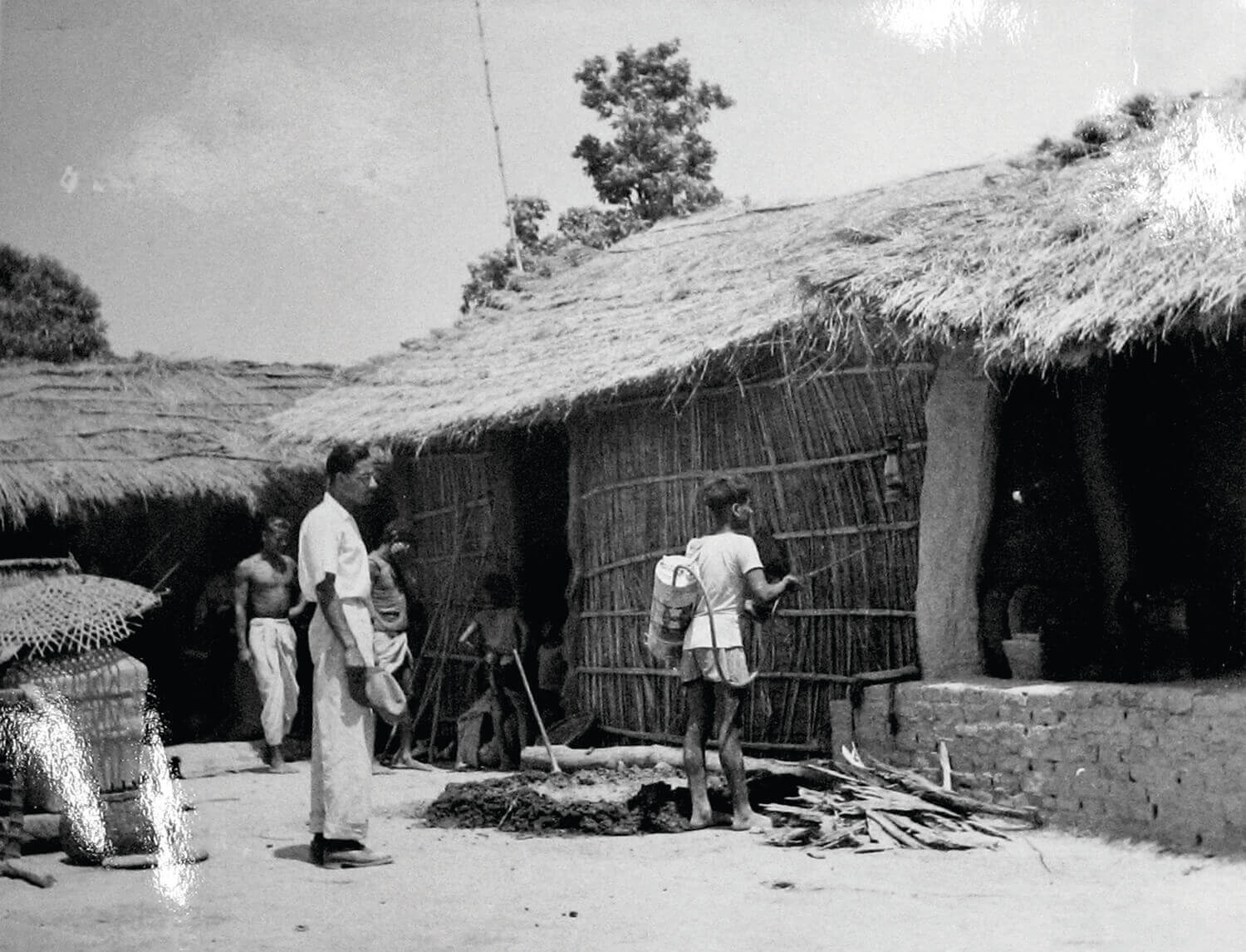
One misconception about the Tharu people is that they never got malaria. In fact they did, but less than hill settlers. A US-led insecticide spraying campaign against malaria in Chitwan in the 1950s. Photo: USOM RECORDS, US NATIONAL ARCHIVES, COLLEGE PARK, MARYLAND.

Republished from Nepali Times with permission. 

The Tharu make up 5% of Nepal’s population. One in every 20 Nepalis is Tharu. They outnumber the Gurung, Limbu, and Newa peoples. And yet, most Nepalis often know very little about Tharu culture and history. There are many things told about the Tharu. Most are wrong.

The first day of the Nepali month of  माघ which this year falls on 14 January is ‘Maaghi’, the Tharu new year. Chitwan Tharu celebrate the day with pwakaa (पोका in Nepali) — anadi sticky rice wrapped in banana leaves reheated in the coals of a fire. Dangaura Tharu in western Nepal celebrate with feasts and dancing. They also elect new community leaders known as barghar.

Maagh 1 is also the day when tenants would decide whether to continue with their landlords–some of whom were Tharu and some पहाडी hill people– or move elsewhere. Before the 1950s, because labourers were hard to find to work in the malarious animal infested Tarai, they had more leverage over the terms of their work than in later years.

Several different Tharu groups live across the Tarai, each with its own language: The Kochila in the East, the Chitwan Tharu in the central area, and Dangaura, Deshauria, and Rana Tharu in the western Tarai. One anthropologist wrote a book about Nepal’s Tharu called Many Tongues, One People.

The Tharu are the original inhabitants of much of the Tarai, because although they sometimes got malaria, they got it less often and with less severe consequences than hill people and people from the plains.

The malaria eradication project in the 1960s dramatically changed Tharu lives. In Chitwan, for instance, in 1955 the Tharu (and related groups such as the Bote and Darai) formed almost 100% of the region’s population of 25,000. By 1970, they had dropped to 14% of the population as 125,000 migrants moved in during those years.

Birendra Mahato, Director of the Chitwan Tharu Culture Museum outside Sauraha, says: “Tourist guides and hotel owners used to spread very inaccurate ideas. They often put us down. Now NTNC (National Trust for Nature Conservation) is giving training to new guides. They now have a much better idea.”

Indeed, there are several misunderstandings about Tharu communities. Some of them are:   

Misconception 1: Historically, The Tharu Were Hunters

The Truth: Tharu were farmers who herded cattle and fished but did not hunt.

In The Kings of Nepal & the Tharu of the Tarai, Gisele Krauskopff writes: ‘The hunting practices of the Tharu have been stressed in many hunters’ books and are part of the biased image of ‘the savage forest dwellers.’ But hunting, and especially hunting as a subsistence technique to provide meat, is not central to the Tharu way of life…Their subsistence is based on a close relationship between paddy cultivation and fishing. The Tharu used to live near the forest, but not in it. They were first and foremost forest clearers, which means that the forest had to be pushed back.’ 

Misconception 2: The Tharu Lived in an Ancient Tarai Forest

The Truth: Tharu lived not in the forest but near it, often near grasslands, and over the years the forest grew and fell back.

Krauskopff writes: ‘Because of the relative isolation of the Tarai, a previously malaria-infested land, prejudiced observers of the 19th and beginning of the 20th centuries created a false image of the Tharu…as savage dwellers of a primeval forest — which the Tarai is not. Old kingdoms have risen and fallen there for at least 2000 years. The forest retreated when farming expanded under prosperous political conditions; the jungle took over in times of instability and conflict.’

Misconception 3: Tharu Are Uncivilised जंगली

The Truth: The Tharu made many ingenious adaptations to their Tarai environment

According to this derogatory inaccuracy, the Tharu are forest dwellers little smarter than animals. They lack knowledge and skills. They collect forest products but don’t use their brains. They do not farm. They are ignorant of the outside world. They are too backward to wear clothes.

“Even now some people in Kathmandu and Pokhara call us uncivilised,” says museum director Mahato. “The Tharu live in the jungle, they say. Many hill people don’t know about the Tarai.”

But in fact, the Tharu have developed many skills useful for their Tarai environment: agriculture, irrigation, house construction, fishing, handicrafts, herbal medicine, forest vegetables, midwifery, wood carving, and animal domestication. All require deep knowledge about the environment.

“If Tharu weren’t smart in this environment, they couldn’t have survived. They were knowledgeable in irrigation, agriculture, जडीबुटी herbs, and fishing. They were skilled in lots of things. That was civilised.”

When outsiders from the hills came to places like Chitwan, they often misunderstood because the Tharu had unfamiliar habits and spoke their own languages. Migrants learned from the Tharu about irrigation, wild animals, and Tarai agriculture. Some learned the Tharu language and respected the Tharu and their traditions. 

Misconception 4: The Tharu Never Got Malaria

The Truth: Tharu got malaria less often than other groups, and died less often than others, but infants often got it, and some died.

Many outsiders, and even some Tharu themselves, think that the Tharu never got malaria. They say Tharu did not get malaria because they ate snails, rice liquor, and spicy chilies. This is wrong. Elderly Tharu will tell you about malaria fever and shivers.

Tharu got malaria and sometimes died from it. ‘It should be remembered that resistance to malaria is acquired after a certain time and that even in a generally resistant population,’ writes Giselle Krauskopff. ‘Tharu children died of malarial fever.’

Compared to hill Nepalis, the Tharu acquired malaria less often and with fewer consequences. They had genetic immunities– high rates of alpha-thalassemia, a genetic pattern common in populations who have lived in malarial areas for generations that reduces both vivax and falciparum malaria, decreasing morbidity by up to tenfold. They also acquired immunities: Those who survived one or two malarial fevers often developed an ability to fight off later attacks.

These immunities meant that malaria posed less of a threat to those who survived infancy. But there was a high infant death rate. A visiting journalist noted in 1962: ‘In hundreds of villages, the child population was destined for malaria in their first year of life as surely as if the mosquitoes flew in with a list of names of the newly-born.’

Mahato says, “Sometimes outsiders, and even the Tharu themselves, say the Tharu never got malaria. Both are wrong. Sometimes I get into arguments with Tharu people who say this. They say to me “नचाहिने कुरा किन गर्छस?” Many are politicised. Older Tharus tell me that they got it.”

To say the Tharu sometimes got malaria should not undercut the argument that the malaria and resettlement programs of the 1950s and 1960s often misunderstood, overlooked, and pushed aside Tharu interests.

Misconception 5: Tharu Society Was Disconnected from Nepali Society

The Truth: Tharu groups before the 1960s had many interactions with other Nepalis and the Kathmandu government. 

Tourist brochures often describe Tharu society with phrases such as ‘untouched by civilization’, ‘timeless’, ‘in total isolation’, ‘living in another time’, and ‘forgotten by civilisation’.

That is hardly the case. Even during malaria days, the Tharu had regular contact with groups from both the north and the south. Traders from the north would come every winter. In many places, Tharu tenants worked for hill landlords. The Tharu worked for the Nepal’s rulers as land clearers and tax collectors. In some places, Rana and other elite visited Tharu areas for huge hunting expeditions. They relied upon Tharu workers to build roads, provide supplies, drive elephants, and find tigers.

That said, it is true that the Tarai’s malaria limited the interactions of the Tharu with outside groups, and gave them limited autonomy.

To learn more about the richness and complexity of Tharu life, please read any of the books cited here or visit the Chitwan Tharu Culture museum near Sauraha, Chitwan. Happy New Year.

----------------------------------------------------------------------------------------------------------------------------

Americans deride Tharu knowledge, 1959

Photo Source: Six Years of Nepal-American Cooperation, 1952–1958 (Kathmandu, 1959)

These official US photos compare traditional Tharu agriculture and modern ‘scientific’ agriculture. The images appeared on facing pages of a book produced in 1959 by the US government to celebrate its assistance to Chitwan and Nepal. At the time, the US ran a large resettlement program in Chitwan. American officials often wrongly saw the Chitwan Tharu as part of an outdated past. According to the implied narrative in the photos, the Chitwan valley was evolving from unproductive ‘backward’ traditions to super-productive, science-based civilisation along the lines of the American Midwest. The photos suggested that the Tharu had little to offer this new Nepal. That was wrong. Tharu taught migrants many things. Some of the new methods succeeded, but some often failed or brought environmental problems.

Rescuing Tharu history from the shadows

A foreign envoy resting on dead rhinoceros, 1913. Photo: Madan Puraskar Pustakalaya.


Rana hunting expeditions couldn’t have happened without expert Tharu mahouts, as this 1913 photo (above) from a hunt connected to Tribhuvan’s coronation shows. But Tharus themselves rarely hunted. Instead they farmed, grazed cattle and buffalo, fished, trapped small animals, and gathered herbs and other resources from the grasslands and forests.

----------------------------------------------------------------------------------------------------------------------------

Writings on Recent Tharu History

Dr. Gisele Krauskopff. ‘From Jungles to Farms: A Look at Tharu History’ in The Kings of Nepal & the Tharu of the Tarai, ed. Pamela Meyer (Los Angeles: Rusca Press, 2000).

Dr. Arjun Guneratne. ‘The Tharu of Chitwan, Nepal’. In Disappearing Peoples?: Indigenous Groups and Ethnic Minorities in South and Central Asia, edited by Barbara Rose Johnston and Barbara Brower (London: Routledge, 2007), p. 91–106.

Guneratne, Arjun. Many Tongues, One People: The Making of Tharu Identity in Nepal. Ithaca: Cornell University Press, 2002.

Muller-Boker, Ulrike. The Chitwan Tharus in Southern Nepal: An Ethnoecological Approach. Stuttgart: Franz Steiner Verlag, 1999.

Thomas Robertson. ‘DDT and the Cold War Jungle: American Environmental and Social Engineering in the Rapti Valley of Nepal’. Journal of American History 104, no. 4 (March 1, 2018): 904–30.

Locke, Piers. “The Tharu, the Tarai and the History of the Nepali Hattisar.” European Bulletin of Himalayan Research. 38 (2011): 61–82.

-------------------------------------------------------------------------------------------------------------------------

Dr. Thomas (Tom) Robertson is creator of the YouTube Mitho Lekhai video series about writing techniques. He is a historian and the former director of Fulbright Nepal/USEF. He is an advisor to the Chitwan Tharu Culture Museum in Bachhauli, Chitwan. He researches the history of development and environmental change in Nepal.

            He first came to Nepali in 1988 and has lived and worked in Nepal for 12 years. Before working for Fulbright, he taught American and global history for 10 years at Worcester Polytechnic Institute (WPI) in Worcester, Massachusetts. Tom received a Ph.D. from the University of Wisconsin-Madison and a B.A. from Williams College.

            Recent publications include “DDT and the Cold War: American Social and Environmental Engineering in the Rapti Valley (Chitwan) of Nepal,” Journal of American History (March 2018). Tom's current research examines the environmental history of US development projects in Cold War Nepal.  

-----------------------------------------------------------------------------------------------------------------------------

This article was published in Nepali Times on 13 January 2021. Republished with permission from the author and Nepali Times. Read the original article.